

Understanding Copytrading for Indian Investors
📈 Explore copytrading in India! Learn how to automatically mimic expert traders, discover benefits and risks, spot top platforms, and smart tips for investing wisely.
Edited By
Grace Mitchell
Capital foreign exchange (capital FX) represents the flow of money that relates to investments, loans, and capital goods between India and foreign countries. Unlike current account transactions, which cover trade in goods and services, capital FX focuses on cross-border financial transactions that affect India’s asset ownership and liabilities.
For Indian investors and businesses, understanding capital FX is vital because these transactions influence currency exposure, investment risk, and compliance with regulatory frameworks. For example, if an Indian company raises equity funding from a foreign investor or invests in an overseas subsidiary, these dealings fall under capital FX.
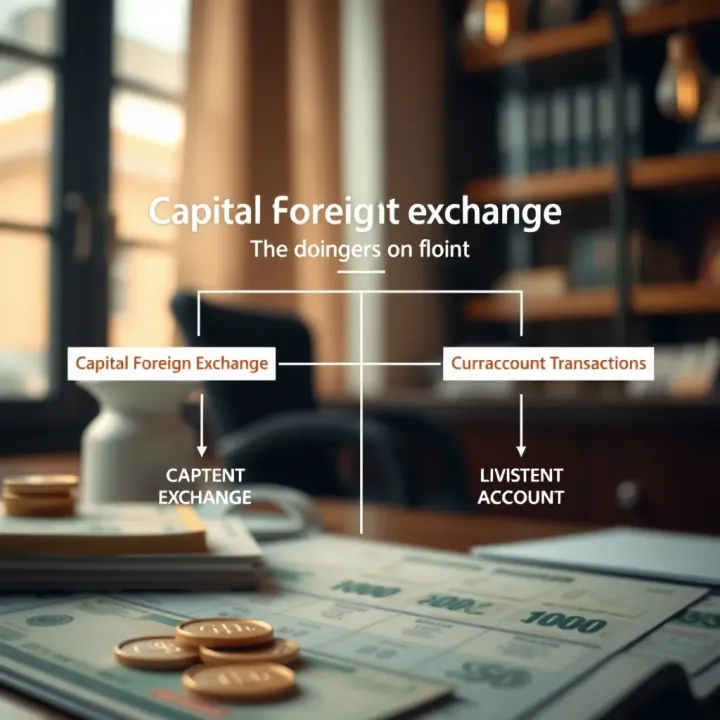
India’s capital FX transactions are regulated by the Reserve Bank of India (RBI) under the Foreign Exchange Management Act (FEMA). The rules govern limits on foreign direct investment (FDI), external commercial borrowings (ECB), and repatriation of funds. Adhering to these regulations helps avoid penalties and ensures smoother cross-border financial flows.
Managing capital FX risks is another important aspect, especially with Indian companies now engaging more in global markets. Currency fluctuations can impact returns and costs, so businesses often use hedging tools like forward contracts or options to mitigate risks.
Successful navigation of capital foreign exchange transactions require a clear grasp of regulations and active risk management to protect investments and optimise financial planning.
Key points to keep in mind:
Capital FX deals primarily with investments, loans, and financial assets crossing borders.
It differs from current account transactions such as import–export of goods.
RBI and FEMA set rules guiding foreign investment inflows and outflows for Indian entities.
Companies and investors should evaluate currency risks and use hedging mechanisms.
This understanding sets the foundation for deeper insights into capital FX, its regulatory environment, risk handling, and impact on Indian trade and investment strategies.
Understanding capital foreign exchange (capital FX) is essential for anyone involved in international trade, investments, or cross-border financial activities in India. Unlike current account transactions that relate to the purchase and sale of goods and services, capital foreign exchange concerns financial assets crossing national borders, influencing long-term economic and investment strategies.
Capital transfers mainly involve the movement of money for investing in assets, acquiring shares in foreign companies, or taking loans from abroad. These differ from current account transactions, which include everyday trade like importing textiles or buying software services. For instance, when an Indian company borrows funds from a foreign bank under an external commercial borrowing (ECB) arrangement, it counts as a capital FX transaction, not a current account one.
This distinction matters because the regulatory treatment, risk exposure, and reporting requirements differ considerably. Capital FX transactions impact the country’s financial assets and liabilities, requiring approval under frameworks like the Foreign Exchange Management Act (FEMA). Understanding this helps investors and businesses navigate compliance while planning their foreign investments or borrowing.
Common examples include foreign direct investment (FDI), where a company in India receives equity investment from overseas; external commercial borrowings like loans or bonds issued in foreign currency; cross-border mergers and acquisitions; and repatriation of capital gains or dividends to foreign investors.
For example, when a Bengaluru-based startup raises $10 million from a Silicon Valley venture fund, this inflow is a capital FX transaction. Similarly, if an Indian business buys property abroad or sells its assets to a foreign buyer, those transactions represent capital flows affecting the country’s capital account.
Capital foreign exchange plays a major role in facilitating investments that fuel economic growth. Funds coming in through FDI help Indian companies expand operations, innovate, and create jobs. It also supports acquisitions of assets abroad, enabling Indian multinational firms to grow their global footprint.
Such inflows bring not just capital but also new technology, management practices, and market access. For instance, foreign funds entering India to invest in the renewable energy sector have been vital in scaling up clean energy projects, which in turn contributes to sustainable development goals.
Cross-border mergers and acquisitions rely heavily on capital FX as companies exchange ownership stakes across countries. Indian firms buying foreign competitors or merging with overseas companies need to navigate complex foreign exchange rules to manage capital movement.
Likewise, foreign enterprises acquiring stakes in Indian businesses transfer capital inward. These deals must comply with RBI guidelines on pricing, reporting, and regulatory approvals. Failure to do so can delay the transaction or invite penalties. Hence, understanding capital FX is critical for smooth execution and maximising value in such cross-border deals.
Capital foreign exchange impacts long-term financial strategies and regulatory compliance for Indian investors and firms involved in global transactions. Clear knowledge enables better planning, risk management, and growth opportunities.
Understanding the regulatory framework governing capital foreign exchange (FX) is essential for investors and businesses dealing with cross-border financial movements. Indian regulations seek to balance facilitation of foreign investments with macroeconomic stability and legal compliance. The Reserve Bank of India (RBI) and the Securities and Exchange Board of India (SEBI) are the principal authorities overseeing capital FX transactions.
The Foreign Exchange Management Act (FEMA), enacted in 1999, forms the backbone of India's foreign exchange regulations. FEMA replaced the earlier Foreign Exchange Regulation Act (FERA) to promote ease and flexibility in foreign exchange dealings while preserving regulatory oversight. It governs all transactions involving foreign exchange, including those on the capital account. FEMA provides guidelines that regulate capital inflows and outflows, such as investments, loans, and asset acquisitions involving foreign currency.
In practice, FEMA establishes a clear distinction between current account transactions, generally liberalised, and capital account transactions, which are subject to certain controls to prevent economic instability. For example, when an Indian company plans to remit funds abroad to acquire foreign assets, approval from the RBI might be mandatory unless the transaction is explicitly permitted under automatic routes.
Permissions and restrictions for capital FX transactions are vital to managing systemic risks. The RBI classifies capital transactions under automatic and approval routes. The automatic route permits certain capital flows without prior RBI approval, streamlining routine transactions like specific foreign direct investments (FDI). However, transactions with higher risk profiles, such as external commercial borrowings (ECBs) exceeding prescribed limits or investments in sensitive sectors, require explicit RBI clearance. This layered permission system safeguards the economy from sudden capital flight or excessive foreign exposure.
SEBI regulates foreign portfolio investments (FPIs), which are capital flows into Indian securities markets by foreign investors. FPIs provide liquidity and market depth but need careful oversight to prevent speculative volatility. SEBI lays down registration norms, investment limits, and disclosure requirements for FPIs, ensuring that foreign investments align with Indian market regulations.
Investors and firms involved with FPIs must adhere to strict compliance rules, including continuous disclosure of holdings, adherence to sectoral caps, and reporting investments under the Foreign Exchange Management (Debt Instruments) Regulations. For instance, mutual funds or foreign institutional investors (FIIs) entering India’s stock markets must register with SEBI and comply with investment ceilings to maintain market order.
Effective capital FX regulation requires thorough understanding of both RBI’s FEMA guidelines and SEBI’s investment norms. This dual framework helps Indian markets stay stable while welcoming foreign capital under structured conditions.
Overall, the regulatory framework shapes how capital foreign exchange functions in India. For investors and businesses, navigating these rules is essential for legal compliance, avoiding penalties, and making informed strategic decisions.
Capital foreign exchange transactions form the backbone of many Indian businesses’ and investors’ international dealings. These transactions impact the capital account, influencing how funds move in and out of India for investments, loans, mergers, and asset transfers. Grasping their basics helps traders, financial analysts, and brokers manage portfolios and projects involving cross-border capital flows effectively.
Foreign direct investment (FDI) involves investors from outside India acquiring ownership stakes or establishing business operations here. These transactions typically include equity investment, reinvested earnings, and capital contributions to subsidiaries or joint ventures. For instance, a US tech firm buying a stake in an Indian startup brings fresh capital, technology, and management expertise into the country.
FDI impacts India’s capital account because it involves the inflow of foreign currency that the Reserve Bank of India (RBI) monitors closely. Such inflows are recorded as credits in the capital account, often boosting foreign exchange reserves and improving the balance of payments. For investors and firms, understanding FDI’s effect helps assess currency exposure and compliance obligations under foreign exchange regulations.
External commercial borrowings (ECBs) let Indian companies borrow funds from foreign lenders like banks or financial institutions. These loans typically come with set terms and limits defined by the RBI. For example, non-banking financial companies (NBFCs) may borrow up to a capped amount at a certain interest rate for infrastructure projects, while adhering to maximum tenure and end-use restrictions.
Currency choice is vital in ECBs, as repayments must match foreign currency obligations, exposing borrowers to exchange rate fluctuations. Companies often arrange hedging strategies through interest rate or currency swaps to manage repayment risks. Understanding these repayment obligations is essential for financial planners to avoid difficulties in servicing foreign debt and to manage costs effectively.
Cross-border mergers and acquisitions (M&A) involve complex foreign exchange considerations, including the movement of funds, exchange rate timings, and regulatory approvals. When a foreign company acquires an Indian firm, the payment for shares or assets requires precise forex arrangements, often monitored by the RBI to ensure compliance with FEMA (Foreign Exchange Management Act).
Valuation and accounting treatment add another layer of complexity. The acquired assets or merged entities must be valued at current foreign exchange rates for accurate accounting. This affects consolidated balance sheets and can influence tax liabilities, goodwill calculations, and shareholder reporting. Hence, finance teams must stay updated about relevant accounting standards and foreign exchange norms to reflect true asset values.
Clear knowledge of capital FX transactions like FDI, ECBs, and cross-border acquisitions equips investors and businesses to balance opportunities with currency risks and regulatory demands in India’s evolving economic environment.
This section guides readers through the key aspects to watch, ensuring smoother navigation of capital flows and their accounting impacts for Indian enterprises engaged in global finance.
Capital foreign exchange transactions expose Indian investors and businesses to several risks, particularly currency volatility and regulatory compliance. Managing these risks effectively is essential to protect investments, ensure smooth capital flows, and avoid legal complications. Understanding the practical aspects of risk management helps businesses thrive in cross-border deals and foreign investments.
Currency risk arises because foreign exchange rates fluctuate unpredictably, impacting the value of capital flows. For instance, if an Indian company borrows US dollars through External Commercial Borrowings (ECBs) and the rupee weakens against the dollar, repayment costs in rupees will rise unexpectedly. Similarly, a foreign direct investment (FDI) in India might lose value if the investor’s home currency depreciates sharply against the rupee.
Such volatility can influence business decisions, affect profit margins, and even deter foreign investments during periods of high uncertainty. Companies dealing with capital FX must keep a close watch on currency trends and market sentiments to anticipate risks.
To manage currency risk, Indian firms often use hedging instruments such as forwards, options, and futures available through authorised dealers approved by the Reserve Bank of India (RBI). For example, a company expecting payment in foreign currency can enter a forward contract locking in an exchange rate, shielding itself against adverse currency movements.
Currency options provide flexibility by allowing investors to benefit from favourable movements while limiting downside risk, though they come at a premium cost. Choosing appropriate hedging depends on risk appetite, transaction size, and market outlook. Importantly, hedging reduces uncertainty and costs associated with capital foreign exchange, enabling better financial planning.
Capital FX transactions require strict adherence to RBI guidelines, including obtaining necessary approvals and maintaining accurate documentation. Incorrect filings or unapproved transactions invite scrutiny, potentially delaying deals or causing financial losses.
Typically, companies must file declarations such as Form ECB-2 for borrowing approval and submit end-use certificates to confirm proper utilisation. Navigating these approvals demands understanding FEMA provisions and timely coordination with authorised dealers.
Non-compliance with RBI regulations on capital foreign exchange risks penalties including fines, interest on delayed payments, and even legal action. For example, failure to repatriate funds within prescribed timelines or exceeding ECB borrowing caps can attract severe penalties.
Businesses should establish robust compliance frameworks involving legal and financial advisers. Regular internal audits and staying updated with regulatory changes safeguard against inadvertent breaches. Ultimately, disciplined adherence fosters trust with regulators and foreign partners, smoothening future capital flows.
Managing risks in capital foreign exchange is not just about avoiding losses but enabling confident participation in international markets.
By understanding currency exposure and regulatory requirements, Indian investors and businesses can manage capital FX risks effectively, turning challenges into growth opportunities.
The future outlook of capital foreign exchange (FX) in India holds significant implications for investors and businesses alike. Understanding emerging trends and technological advances helps stakeholders navigate changing regulations and global economic dynamics. This awareness fosters better decision-making around cross-border investments, asset transfers, and risk management.
Foreign direct investment (FDI) flows to India are evolving continuously due to factors like changing global manufacturing hubs and emerging markets. For example, recent supply chain disruptions have encouraged companies to diversify investments beyond China, increasing FDI inflows into India’s sectors like electronics and pharmaceuticals. However, capital controls may tighten or ease depending on government priorities and economic needs, influencing the liquidity and stability of capital accounts.
Businesses planning large capital movements should watch these shifts closely. Suppose India imposes stricter caps or approval processes on certain sectors. In that case, companies may need alternative routes such as joint ventures or local partnerships to avoid regulatory roadblocks and delays, impacting cash flow and project timelines.
Trade agreements like the Regional Comprehensive Economic Partnership (RCEP) or India’s Free Trade Agreements (FTAs) with key partners affect capital FX by easing investment restrictions and customs duties. Investors and businesses can benefit from reduced barriers and clearer norms, easing capital transfers and repatriation processes.
Geopolitical tensions, however, add uncertainty. Recent disruptions in global trade routes or sanctions on specific countries can restrict certain capital flows or raise compliance costs. Firms with exposure to such risks must prepare contingency plans, such as currency hedging or diversified portfolios, to maintain resilience.
Modern digital platforms streamline and speed up capital FX transactions, making them more transparent and cost-effective. Services by Indian banks like ICICI or Axis Bank, integrated with real-time messaging systems and UPI-based payments, allow users to execute external commercial borrowings or FDI-related transfers without cumbersome paperwork.
This digital shift reduces errors and processing times, while enhancing regulatory oversight. For instance, blockchain trials in foreign exchange settlements have shown promise in reducing fraud and improving audit trails, increasing investor confidence.
India Stack's unified digital infrastructure is making cross-border payments smoother by linking Aadhaar, DigiLocker, and e-KYC utilities. These tools simplify identity verification and transaction approvals, reducing friction for foreign investors and Indian businesses.
On the other hand, the Open Network for Digital Commerce (ONDC) aims to democratise digital trade, potentially enabling smaller firms to access global markets via simplified foreign exchange settlements. While still evolving, ONDC could bring more inclusivity and lower transaction costs for capital movements across borders.
Keeping an eye on technological advancements and global shifts ensures businesses and investors can proactively adapt to India's changing capital foreign exchange environment, securing smoother operations and better financial planning.
📈 Explore copytrading in India! Learn how to automatically mimic expert traders, discover benefits and risks, spot top platforms, and smart tips for investing wisely.

🔍 Explore cryptocurrency and NFTs in India, learn their key differences, investment risks, uses, and current regulations to make smart digital asset decisions. 💰📱

Explore how Binance minimum deposit works for Indian investors 🇮🇳. Learn about payment options, trading impact, and tips to handle deposits smartly on this crypto platform.

Learn how to open a forex trading account in India, explore types of accounts, pick reliable brokers, manage risks, and understand legalities for safer currency trading 📊💱.
Based on 8 reviews