
Understanding Qutex Trade Platform Features & Benefits
Explore Qutex Trade's platform features, market stance, trading options, security, and user experience for informed trading decisions 🔒📈💼
Edited By
Ethan Clarke
A forex trade demo account lets you explore currency trading without risking your money. It’s a simulated environment that mirrors real market conditions, giving traders a chance to practise before committing actual capital. This practice is particularly useful for beginners who want to understand how forex trading platforms work, how market orders function, and how strategies play out in different scenarios.
Unlike with live accounts, a demo account operates with virtual funds, letting you buy and sell currency pairs like USD/INR or EUR/USD without financial consequences. For example, if you place a trade on a demo platform and the market moves against your position, your virtual balance simply adjusts without affecting your real funds. This lets you learn from mistakes without stress.
Using a forex demo account is like driving a car on a simulator before hitting the road — you get to know the controls, feel the timing, and understand the traffic rules before real journeys.
Familiarisation with Platforms: Demo accounts help you get comfortable with interface features of popular trading apps like Zerodha, Upstox, or international platforms such as MetaTrader 4/5.
Testing Strategies: You can try momentum trading, scalping, or carry trade without financial risk, identifying what works best in varied market situations.
Understanding Market Dynamics: The real-time data and price fluctuations on demo accounts reflect the live forex market, helping you grasp volatility and liquidity.
Practice executing market and limit orders
Use leverage carefully within simulated settings
Track profit and loss calculations
Experiment with different currency pairs
Before trading live, spending sufficient time on a demo account can build your confidence and reduce costly errors. Just remember, emotions and liquidity might behave differently when real money is involved.
This practical approach forms the foundation for successful forex trading in India and worldwide.
A forex trade demo account is a vital stepping stone for anyone interested in currency trading without risking real money. It provides a realistic practice setup that mirrors actual forex market conditions. Beginners and seasoned traders alike use demo accounts to test strategies, understand platform features, and gauge how the market works before committing real capital.
A demo account offers a simulated trading environment designed to closely match real forex markets. This means you can place buy or sell orders as you would in a live market, but without any financial consequences. Its main advantage is that you can experience market dynamics, such as price fluctuations and order execution, in a controlled space. For example, when the US dollar strengthens against the Indian rupee in the demo, your virtual trades will reflect the same price movements.
Demo accounts provide virtual funds, usually a predetermined amount like $10,000 or ₹7 lakh, to trade freely. This helps you understand managing capital without any risk. Unlike purely theoretical simulations, demo accounts feed real-time market data, ensuring that price changes and market trends are authentic. This combination allows practising realistic decision-making without the pressure of losing actual money. For instance, if you take a position on EUR/USD, the live exchange rates from global markets will impact your virtual trades.
Demo platforms typically offer a full suite of trading tools and an interface identical to live accounts. This includes charting software, technical indicators, order types, and news feeds. Such tools help you get hands-on experience with analysing trends and placing different kinds of orders. As an example, a trader can use moving averages or RSI indicators on the demo to decide entry and exit points. Getting comfortable with these tools in a no-risk setting saves time and prevents costly mistakes later on.
The clearest difference is that demo trading involves no real money. You cannot lose or gain actual funds; all profits and losses are virtual. This removes emotional stress and financial pressure, enabling you to experiment freely. However, the lack of real risk can lead some traders to take unrealistic trades, which might not reflect their live behaviour.
While demo accounts use live market data, execution conditions can vary. Sometimes, order fills, slippage, and spreads in demo setups are idealised and not entirely reflective of live trading. For example, during volatile market hours, a live account might experience delayed order execution or wider spreads, but a demo account could show seamless fills. Understanding this gap helps you prepare for the challenges in real trading.
Trading with virtual money cannot replicate the psychological stress of risking your own capital. Emotions like fear, greed, and hesitation rarely appear in demo trading. This means your decision-making in a demo account might be bolder or more careless compared to live markets. For example, traders often place larger trades or ignore risk management in demos. Recognising this difference is crucial before moving from demo to live forex trading.
A forex demo account is an excellent way to learn, but it cannot fully prepare you for the psychological and execution realities of live trading.
In summary, forex trade demo accounts provide a genuine platform to practise trading with real market data and useful tools, all without risking money. Yet, the differences in execution and psychology mean it’s essential to approach demo trading as a learning step rather than a direct substitute for live experience.
A forex demo account provides a safe space for beginners and seasoned traders alike to familiarise themselves with currency trading without risking real money. This makes it an ideal tool for learning practical trading skills, understanding market behaviour, and building confidence before moving to live trading.
Understanding forex market basics is the first step when you start trading currencies. With a demo account, you can watch how currency pairs fluctuate, observe how spreads and pips work, and gain insight into trading session overlaps—all without any financial pressure. For instance, an Indian trader learning about USD/INR pair dynamics can notice how global events or RBI decisions influence prices in real-time, helping grasp fundamental concepts effectively.
Testing different trading strategies becomes effortless using a demo account. You might want to explore scalping during volatile market hours or try swing trading over longer periods. By simulating trades without risking ₹50,000 or ₹1 lakh, you can assess which strategies align with your style and risk tolerance. Practising entries, exits, and stop-loss placements on virtual funds helps refine tactics before they meet real market conditions.
Navigation and order placement on trading platforms can seem overwhelming initially. Demo accounts allow you to explore app features like placing market or limit orders, setting stop losses, or modifying trades, all without pressure. For example, understanding how to quickly place an order during the NSE open session using MetaTrader or Zerodha’s platform ensures smoother execution when real capital is on the line.
Using charting and analysis tools is crucial to successful forex trading. Demo accounts provide access to charts, indicators, and technical analysis tools such as RSI, moving averages, and Fibonacci retracement. Practising these tools helps you analyse market trends and price action skillfully. Knowing how to draw trend lines or spot divergence increases your chances of making informed decisions, especially during high-volatility times like US Fed announcements.
Practising on a demo account bridges the gap between theoretical knowledge and real trading, making it indispensable for anyone serious about forex.
In short, a forex demo account helps you grasp market basics safely, test your strategies with virtual money, and become fluent in platform operations and analysis before committing real funds.
Setting up and using a forex demo account is a practical first step for beginners wanting to explore currency trading without risking real money. A demo account helps you familiarise yourself with market functions, trading platforms, and strategies realistically, using virtual funds that mimic real market conditions. This section covers how to pick the right broker, open your demo account, and practise effectively for steady progress.
Regulation and reputation
Selecting a broker regulated by recognised authorities like the Securities and Exchange Board of India (SEBI) or international bodies ensures safety and fairness. A regulated broker protects your interests by maintaining transparent policies and compliance, reducing the risk of scams or unreliable practices. For example, brokers like ICICI Direct or Zerodha operate under SEBI regulation, giving traders confidence in their demo and live trading services.
Platform features and ease of use
Your forex demo experience depends greatly on the trading platform's features and user-friendliness. Choose brokers offering intuitive platforms such as MetaTrader 4 (MT4), MetaTrader 5 (MT5), or their proprietary apps with easy navigation, quick order placement, and robust charting tools. A smooth interface allows you to test strategies and analyze price movements without frustration, helping you concentrate on learning rather than battling the software.
Registration process
Opening a demo account usually involves a quick online registration where you provide basic information like name, email, and phone number. Usually, there's no need for lengthy documentation since no real money is involved. This fast setup lets you start practising within minutes, providing easy access to a realistic trading environment.
Downloading or accessing the trading app
Once registered, you can download the broker's trading software or access their platform via a web browser. Mobile apps are also common, allowing you to trade or monitor markets on the go. For instance, the Zerodha Kite app lets you switch between demo and live accounts easily, making it convenient for those who want to keep practising anywhere, anytime.
Setting virtual funds and preferences
Broker platforms typically let you customise your demo account by choosing the amount of virtual funds to start with—often ₹1,00,000 or more—and setting preferences like leverage and currency pairs to simulate realistic conditions. Tailoring these settings helps you experiment within limits similar to what you’d face in live trading, making practice sessions more valuable.
Simulating real trades
The core value of a demo account lies in simulating real trades under genuine market conditions. Use it to place buy or sell orders, set stop-loss and take-profit levels, and observe how trades unfold with changing forex rates. This hands-on practice improves your decision-making and helps you understand how market events impact prices.
Keeping a trading journal
Documenting your trades and strategies in a journal is a powerful way to track improvement and learn from mistakes. Note down entry and exit points, reasons for taking trades, outcomes, and lessons learned. Over time, this habit sharpens your trading skills and prepares you well for live forex trading, where emotional discipline is crucial.
Practising with a well-chosen demo account not only preserves your capital but builds the confidence and knowledge needed to trade forex effectively in real markets.
In short, setting up and using a forex demo account involves picking a reliable broker, quickly registering, downloading the right platform, customising your virtual funds, and practising actively while keeping track of your trades. These steps form the foundation for any trader aiming to successfully transition from demo to live forex trading in India.
Understanding the limitations and common misconceptions about forex demo trading is key for any beginner aiming to transition smoothly to live trading. While demo accounts offer a risk-free practice ground, they can’t fully replicate every aspect of real market trading. Being aware of these differences helps set realistic expectations and improves preparation for actual trading.
Demo trading lacks the emotional pressure you face when real money is at stake. In a live environment, fear of loss or excitement from gains can heavily influence decision-making. For instance, many traders hesitate or exit trades prematurely when real capital is involved, but they might take bolder risks in a demo environment. This difference often results in an unrealistic sense of confidence that demo trading can breed.
Because there’s no actual money involved, traders sometimes develop overconfidence from consistent demo profits. They might overlook the need for strict risk management or underestimate market volatility. This can be dangerous once they move to live trading. For example, a trader who repeatedly wins in a demo might ignore stop-loss orders in real trading, exposing themselves to large losses quickly.
One of the most noticeable differences is how orders are executed. In a demo account, trades typically execute at the exact price you choose. However, in live markets, slippage—a difference between expected price and actual execution price—can occur, especially in volatile conditions. This matters because slippage can widen losses or reduce profits, and it’s something demo traders often don’t experience.
Demo accounts usually simulate ideal liquidity, meaning you can buy or sell assets instantly at close to market prices. In reality, liquidity varies depending on the currency pair, time of day, and market events. For example, during off-hours or political turmoil, liquidity can drop drastically, causing delayed execution or wider spreads. These factors impact trade outcomes but remain hidden in a demo setup.
Remember, demo trading is a great starting point but doesn’t capture the full emotional and practical realities of live forex trading. Being aware of these limitations prepares you better to handle the challenges when moving to real money trading.
Transitioning from a forex demo account to live trading marks a significant step in your trading journey. While demo accounts provide a safe space to learn, live trading exposes you to real market risks and emotional challenges. Understanding when you are ready and how to manage real money are key to making this move successful.
Consistent demo trading results indicate that your strategies and skills have started to mature. If you can repeatedly make profitable trades over several weeks or months in the demo setup, it shows your approach works under varied market conditions. For example, a trader practising on demo for three months and maintaining steady gains while managing losses effectively is generally ready to test their skills with real money. However, consistency on demo itself is only one piece of the puzzle—it should come alongside confidence in executing trades and adapting to changing market signals.
Understanding risk management is crucial before moving to live trading. Demo accounts do not fully capture the psychological impact of losing real money, so preparing to manage risk carefully is essential. This means setting stop-loss limits, calculating position sizes, and being ready to accept small losses without panic. For instance, only risking 1-2% of your capital on a single trade is a common practice among professional traders. Knowing how to protect your capital helps avoid the emotional pitfalls that can lead to impulsive decisions in live markets.
Starting with small capital allows you to experience the pressures of live trading without risking a big amount at once. Even ₹10,000 to ₹20,000 can be enough to understand how your demo strategies perform with real money on the line. This approach eases you into handling real emotions like fear and greed, which demo trading can't replicate. Many brokers offer micro or mini accounts that support small investments and flexible lot sizes, helping beginners manage their initial exposure carefully.
Setting realistic goals keeps your trading grounded. Instead of chasing high returns immediately, focus on steady growth and learning from mistakes. For example, aiming for 5-10% monthly returns as a beginner is reasonable compared to expecting unrealistic profits. Setting achievable targets helps sustain motivation and promotes disciplined trading, reducing the risk of overtrading or reckless bets. Being realistic also means acknowledging that losses will happen and preparing mentally and financially to handle them without panic.
Moving from demo to live trading is as much about mindset and strategy as it is about capital. Preparing well ensures you navigate live markets with more confidence and control.
Taking this careful approach can bridge the gap between theory and practice, allowing you to trade forex with greater clarity and discipline.
Explore Qutex Trade's platform features, market stance, trading options, security, and user experience for informed trading decisions 🔒📈💼

Learn how to master trading with QXBroker.com demo! 📈 Open an account, explore tools, simulate trades, and gain confidence before going live - perfect for Indian traders. 🇮🇳
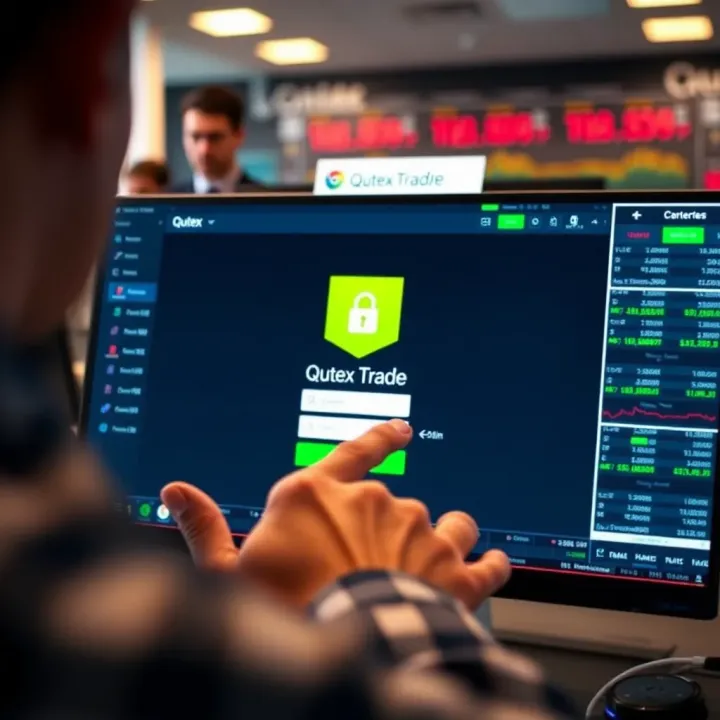
🔐 Learn how to log in to Qutex Trade, set up your account, secure it, troubleshoot common issues, and explore key platform features for smooth trading.

Explore how RBI approved forex brokers in India work legally, their services, risks, and what to watch for when trading forex with regulated brokers. 💹🇮🇳
Based on 6 reviews