
Reliance Share Price Outlook for 2025
📈 Explore Reliance Industries' share price outlook for 2025 with insights on business segments, financial trends, and expert analyst predictions. 💹
Edited By
Henry Walker
India's economy stands at a significant crossroads as 2025 approaches. After a period marked by both rapid growth and disruptive global events, understanding the key factors driving the nation's economic future is critical for investors, traders, and analysts. This section provides a snapshot of the economic landscape, highlighting growth trends, policy directions, and sectoral shifts that will influence India's trajectory.
The latest data from the Ministry of Statistics and Programme Implementation show India's GDP growth recovering steadily, with projections around 6-7% for the coming year. This rebound is largely fueled by domestic consumption, increasing capital investments, and a resurgence in exports, particularly in pharmaceuticals, IT services, and textiles.
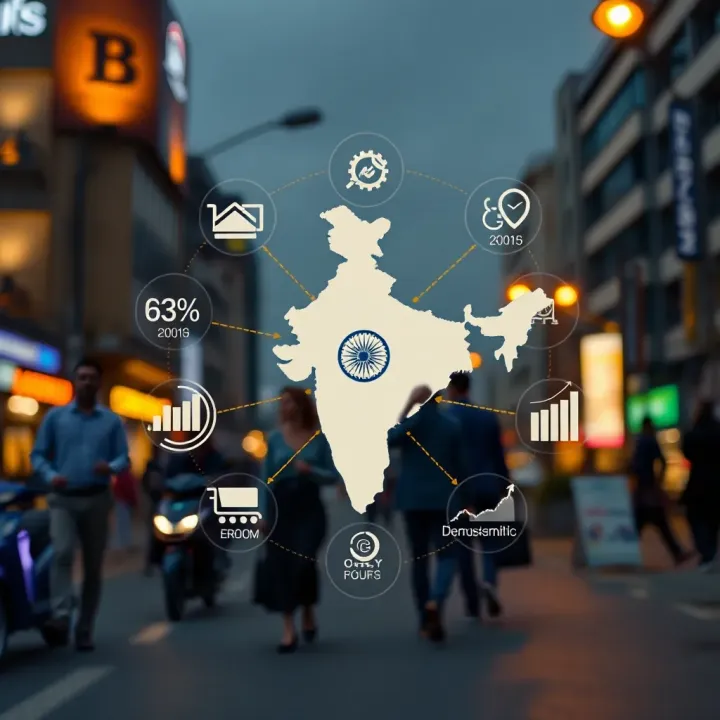
Several government initiatives like the Production-Linked Incentive (PLI) schemes are boosting manufacturing sectors, while reforms in digital infrastructure continue to encourage fintech and e-commerce expansion. The emphasis on renewable energy and electric vehicles under programmes like the National Electric Mobility Mission highlights India's commitment to sustainable growth.
Demographic advantages remain a decisive plus, with a young workforce creating demand and innovation potential. However, challenges persist — inflationary pressures, supply chain disruptions, and global geopolitical tensions could temper growth.
Staying abreast of policy shifts such as RBI’s monetary stance and SEBI’s regulatory updates will help market participants anticipate market moves and manage risks better.
Key economic drivers to watch include:
Infrastructure spending: Increased budget allocations for roads, railways, and urban development.
Foreign direct investment (FDI): Relaxation in sectors like defence and telecom attracting capital.
Digital economy: Rising adoption of Unified Payments Interface (UPI) and Indian digital platforms accelerating financial inclusion.
Sectoral growth: Fast-moving consumer goods (FMCG), healthcare, and green energy sectors offer growth opportunities.
Understanding these factors together provides a clearer picture of India’s economy as it heads towards 2025, helping professionals identify where gains may lie as well as the risks to watch out for.
Understanding the current state of India's economy is crucial for assessing its growth prospects by 2025. The baseline economic performance, reflected through key indicators like GDP growth, inflation, and employment, sets the context for forecasting future trends. For traders and analysts, this snapshot offers insights into market stability and emerging opportunities.
GDP growth trends: India’s GDP growth has been robust post-pandemic, generally hovering around 6-7% annually before recent headwinds. This rapid growth contrasts with many global economies still grappling with slowdowns. The strength comes mainly from domestic consumption and government spending, while exports face challenges from global trade tensions. For investors, GDP growth signals the overall health of the economy, influencing decisions on equity and debt markets.
Inflation and monetary policy: Inflation remains a key concern, with food and fuel prices often driving volatility. The Reserve Bank of India (RBI) has been actively managing inflation through calibrated interest rate adjustments. Recently, repo rate hikes aimed to tame price pressures without choking growth. For financial analysts, monitoring inflation trends and RBI’s policy stance helps anticipate shifts in borrowing costs and market liquidity.
Employment and labour market: Employment metrics reflect gradual recovery though challenges persist, especially in informal sectors. Urban job creation in technology and service industries shows promise, yet rural employment remains fragile due to monsoon variability and agriculture dependence. Labour market health influences consumer spending power and wage inflation, directly impacting corporate earnings forecasts.
Challenges faced during and post-Covid: The pandemic caused supply chain disruptions and a sharp contraction in demand that affected manufacturing and services alike. The informal economy suffered the most, with many daily wage earners facing livelihood issues. Post-Covid recovery is uneven, with inflationary pressures and global commodity spikes complicating the rebound.
Sector-wise recovery status: While IT and pharma have bounced back strongly, sectors like retail, hospitality, and real estate continue to face hurdles. The automobile sector is navigating semiconductor shortages, slowing growth. Understanding sector-level recovery aids investors in reallocating portfolios for better risk-adjusted returns.
Consumer spending and investment trends: Consumer confidence is improving, especially in urban centres, boosting FMCG and durables sales ahead of festive seasons. Corporate investment remains cautious, focusing on automation and digitalisation rather than capacity expansion. For investors and brokers, tracking these trends helps identify demand drivers and potential growth pockets in the economy.
A clear grasp of these economic parameters allows market participants to position themselves advantageously amid India’s evolving economic landscape leading up to 2025.
Government policies will significantly influence India's economic growth trajectory over the next few years. These policies are designed to boost production, improve infrastructure, and embrace digital transformation, creating a more competitive and resilient economy. For traders and investors, understanding these measures helps spot where the government is directing focus and capital, which in turn shapes investment opportunities.
Launched to reduce dependency on imports and build a strong manufacturing base, the Make in India campaign encourages companies to manufacture domestically rather than outsource abroad. The PLI scheme complements this by offering financial incentives to manufacturers based on incremental production. For instance, sectors like electronics, pharmaceuticals, and automotive have seen increased investments because of PLI rewards. This approach aims to boost exports, generate jobs, and move India up the global value chain.
Investors keen on industrial stocks should watch companies benefiting from these schemes, as government backing often improves profitability and long-term viability. Also, PLI's result in scaling production capacities aligns with India's ambition to become a manufacturing hub by 2025.
Infrastructure expansion remains vital to sustaining economic growth. The government is investing heavily in highways, railways, ports, and airports to ease logistics bottlenecks and lower costs for businesses. For example, dedicated freight corridors and national highway projects improve supply chain efficiency, an advantage for manufacturing and exports.
Simultaneously, investment in the energy sector, especially renewable sources like solar and wind, aligns with sustainability goals and energy security. The increasing focus on green energy projects offers avenues for investments in both established power producers and startups innovating in energy storage and distribution.

India Stack is a set of open application programming interfaces (APIs) and digital infrastructures that enable government and private entities to offer services digitally. It includes platforms like Aadhaar, Unified Payments Interface (UPI), and DigiLocker, which streamline identity verification, payments, and document storage respectively. This ecosystem not only supports financial inclusion but also accelerates digital transactions crucial for a modern economy.
The Open Network for Digital Commerce (ONDC) aims to create a unified platform for online commerce, breaking down barriers between sellers and customers. It enables small businesses and kirana stores to tap into the digital market with minimal investment, broadening consumer access and competition.
Together, India Stack and ONDC democratise digital economy participation, making these platforms attractive for fintech and e-commerce investors watching scalable, inclusive growth trends.
The government fosters innovation by establishing startup incubators and innovation hubs across cities, supported by funding and simplified regulatory norms. Initiatives like Startup India offer tax benefits and easier compliance, encouraging entrepreneurship in technology, healthcare, and green energy sectors.
These hubs spur ecosystem collaboration, attracting venture capital and private equity interest. Financial analysts should note these emerging startups may disrupt existing markets or create new niches, providing fresh investment avenues as India transitions to a knowledge-driven economy.
Government policy acts as a compass showing where India's economy is heading. For investors and analysts, understanding these policy frameworks uncovers the sectors and companies poised for growth, helping make more informed decisions in a dynamic economic landscape.
India’s economic prospects for 2025 hinge on the performance of key sectors that drive employment, exports, and innovation. This section highlights agriculture, manufacturing, and services—three pillars shaping the country’s growth. Traders and investors focusing on these areas can spot opportunities early and assess risks based on sector-specific trends.
Modernisation in agriculture primarily involves adopting precision farming, digital tools, and better cold chain logistics to reduce wastage and improve yields. For instance, digital platforms connecting farmers directly to buyers are cutting out middlemen, helping increase farmers’ income. This also enhances food security by stabilising supply.
Supply chain upgrades with refrigerated transport and storage infrastructure in rural areas reduce spoilage of perishables like mangoes and milk. Improved logistics lower distribution costs and improve delivery timelines, ultimately making agricultural products more competitive both domestically and for exports.
Schemes like PM-Kisan provide direct income support to smallholders, boosting their purchasing power and stabilising rural demand. Meanwhile, the Soil Health Card initiative helps farmers optimise fertiliser use, increasing crop productivity while lowering input costs.
Besides financial assistance, the government promotes micro-irrigation and crop insurance programmes, reducing vulnerability to weather shocks. These efforts collectively make farming more sustainable and resilient, and that translates to steadier rural economies contributing to broader growth.
India has become a global hub for electronics manufacturing thanks to the Production Linked Incentive (PLI) scheme, which encourages companies to set up plants with export capability. This sector’s rise benefits exporters and suppliers, stimulating large-scale employment.
The automotive segment is growing with a shift towards electric vehicles (EVs), supported by government incentives and improved charging infrastructure. Pharmaceuticals, meanwhile, continue to expand, driven by exports of generic medicines and vaccine production, which gained global prominence during the pandemic.
Micro, Small, and Medium Enterprises (MSMEs) form the backbone of India’s manufacturing sector. They contribute nearly 30% of the GDP and provide employment to over 110 million people. Quick decision-making and niche production make MSMEs agile players in supply chains.
The government’s credit-linked subsidy schemes and digital platforms have boosted MSME access to formal credit and markets. For traders and investors, MSMEs represent a sizeable opportunity for portfolio diversification and tapping into localised production strengths.
India’s IT sector is a global powerhouse, accounting for a significant portion of export revenues and employment in urban areas. Growth here is propelled by rising demand for cloud computing, software development, and business process outsourcing (BPO) services.
Emerging technologies like artificial intelligence, blockchain, and cybersecurity present fresh avenues for investment and innovation. Firms based in Bengaluru, Hyderabad, and Pune lead this transformation, making IT a constant driver of economic momentum.
Rapid fintech adoption enabled by India Stack and UPI (Unified Payments Interface) has transformed financial inclusion. Digital lending, wealth management apps, and insurance tech are booming, supported by millions of users across tier-2 and tier-3 cities.
Traditional banks are partnering with startups to widen credit access via data-driven risk assessment. This sector’s growth not only fuels capital markets but also strengthens retail consumption and SME financing, key components of India’s economic growth.
Understanding the dynamism of these sectors allows market participants to navigate India’s growth landscape effectively. Each sector presents distinct risks and rewards, underscoring the need for a focused, sector-wise strategy.
Demographic and social trends shape the foundation of India’s economic prospects by 2025. The size and composition of the workforce, patterns of urbanisation, and access to education and vocational skills directly impact productivity, consumption, and investment. For traders and investors, understanding these trends provides insight into future demand dynamics and labour market shifts, which influence sectoral growth and government policy responses.
India’s youthful population offers significant potential as its working-age group expands. By 2025, over 65% of the population will be between 15 and 64 years, providing a large labour pool which can drive economic output if harnessed properly. However, this demographic dividend comes with challenges such as job creation, underemployment, and informal labour markets. For instance, while metropolitan areas offer more opportunities, rural-to-urban migration risks expanding unorganised sectors and slums if infrastructure lags.
Urbanisation itself presents both opportunities and urgencies. Indian cities are expected to add nearly 90 million new residents by 2030, straining housing, transport, water, and sanitation systems. Without substantial upgrades, congestion and pollution could hamper productivity and living conditions. For investors, this means growing demand for real estate, public transport, and utility services, alongside strong government focus on smart city projects and affordable housing schemes.
Government-led vocational training programmes form a core strategy to prepare India’s workforce for evolving industry needs. Schemes like the Pradhan Mantri Kaushal Vikas Yojana (PMKVY) focus on skill acquisition aligned with sectors such as manufacturing, textiles, and IT. These initiatives enhance employability and aim to reduce skill mismatch, thereby boosting worker productivity and lowering unemployment.
Still, bridging skill gaps remains critical for emerging industries like fintech, renewable energy, and electric vehicles. Many freshers lack specialised skills demanded by these sectors, creating bottlenecks. Collaboration between educational institutions, industries, and government is key for curriculum updates and internships that provide practical exposure. For financial analysts and investors, tracking these skill development efforts helps gauge workforce readiness and potential bottlenecks in sectoral expansion.
A resilient economy depends on a youthful but skilled workforce supported by adequate urban infrastructure. This combination not only fuels demand but also shapes India’s competitiveness in the 2025 global market.
The young workforce can attract foreign and domestic investments in labour-intensive industries.
Urban infrastructure development drives sectors like construction, utilities, and transport.
Vocational skill training influences labour productivity and sector growth.
Monitoring government policies on urbanisation and skill enhancement provides clues on future economic hotspots.
This focus on demographic and social trends is central to anticipating India’s economic growth patterns and investment opportunities in the near future.
Understanding the risks and challenges ahead is vital for assessing India’s economic path towards 2025. These factors can significantly affect investor confidence, policy decisions, and market stability. Traders and financial analysts must weigh these risks carefully against growth opportunities to make informed decisions.
Balancing growth with price stability: India faces the delicate task of supporting economic growth while controlling inflation. Persistent high inflation erodes purchasing power and can prompt the Reserve Bank of India (RBI) to tighten monetary policy, possibly slowing growth. For example, the rise in fuel prices recently pushed inflation beyond the RBI’s comfort zone, forcing caution on interest rates. Investors keep a close watch on inflation trends because unchecked price rises can dampen consumer demand and hurt corporate earnings.
Fiscal consolidation strategies: Managing the fiscal deficit remains crucial as India ramps up spending on infrastructure and social programmes. The government strives to reduce the fiscal gap without stalling growth, often through better tax compliance and prudent expenditure cuts. In FY 2024-25, the challenge will be to avoid excessive borrowing that might crowd out private investment, while still financing key schemes like PM Awas Yojana. Effective fiscal management reassures markets about India’s fiscal health and debt sustainability.
Impact of international trade tensions: Trade conflicts between major economies can disrupt India's export markets and import costs. For instance, ongoing US-China tensions affect global supply chains where India sources electronics components or exports textiles. Tariff hikes or sanctions could increase input costs for Indian manufacturers, squeezing margins. Traders and investors should watch global diplomatic developments closely as they ripple into local businesses.
Energy prices and supply chain disruptions: India is heavily dependent on oil imports, so global energy price volatility directly impacts inflation and the trade deficit. Fluctuations in crude oil prices can increase production costs for industries such as chemicals and transport. Recent supply chain issues, like semiconductor shortages, have hurt automotive manufacturing, highlighting vulnerabilities. These factors can slow growth and increase input costs, affecting profit margins and market valuations.
Climate change effects on agriculture and industry: Erratic monsoons and rising temperatures threaten agricultural output, which still employs over 40% of India's workforce. Crop failures can disrupt rural incomes and food supply chains, pushing inflation higher. Industries too face risks from water shortages and extreme weather impacting production. Investors increasingly factor climate risk into investment decisions, recognising its growing influence on India’s economic resilience.
Government policies on renewable energy adoption: India’s push towards renewable energy aims to reduce dependence on fossil fuels and cut carbon emissions. This shift opens investment avenues in solar, wind, and green hydrogen sectors. The government’s ambitious targets under the National Solar Mission signal strong policy support. For investors, the renewable sector offers growth potential while helping the economy meet sustainability goals. Yet, the transition needs careful management to avoid disruptions in energy supply.
Addressing these risks comprehensively remains key to sustaining India’s growth momentum and market confidence as 2025 approaches.
📈 Explore Reliance Industries' share price outlook for 2025 with insights on business segments, financial trends, and expert analyst predictions. 💹
📈 Explore Reliance Industries' share price targets for 2025, expert insights, risks, and strategies to guide investors in India's dynamic market landscape.

📈 Explore Reliance Industries' share price outlook till 2025: key company insights, sector trends, risks & expert views for smarter investing decisions in India.
Explore Reliance Industries' growth by 2030 📈, including key sectors, strategies, challenges, and impact on India’s economy and global markets 🌏.
Based on 11 reviews