
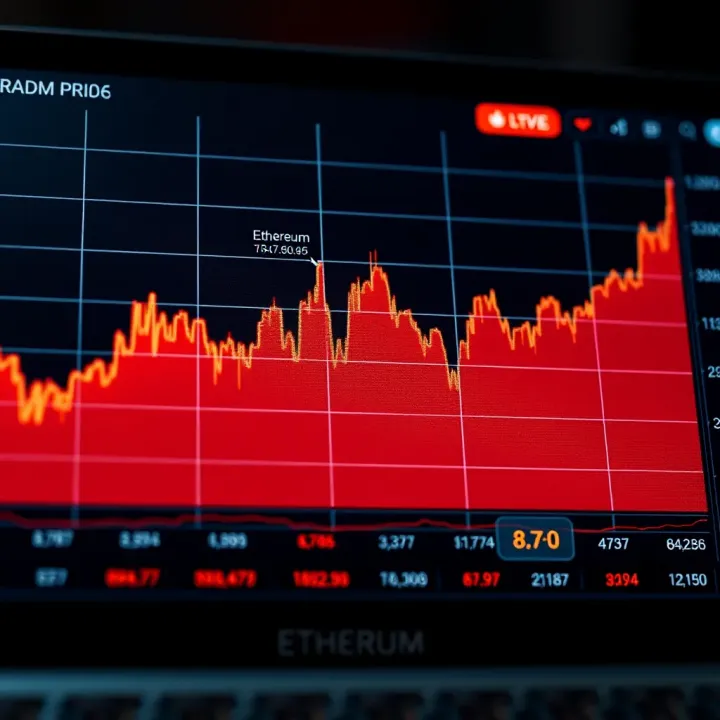
Understanding the Current Ethereum Price in India
Track Ethereum's (ETH) price trends 📈, understand market factors affecting value, and learn how Indian investors can monitor ETH effectively with easy tools 💹.
Edited By
Emily Fletcher
Ethereum, often called the world's second most popular cryptocurrency after Bitcoin, has gained significant attention among traders and investors. Its price against the US dollar (USD) shifts moment to moment, influenced by global demand and digital market fluctuations. Understanding how to track Ethereum's live price can empower those seeking informed decisions, especially in the Indian investment context.
Ethereum operates on blockchain technology, a decentralised digital ledger, making its value volatile yet attractive for high-return investments. The live price reflects real-time market trades happening across global exchanges, measured in USD since it is the universal trading currency for cryptocurrencies.
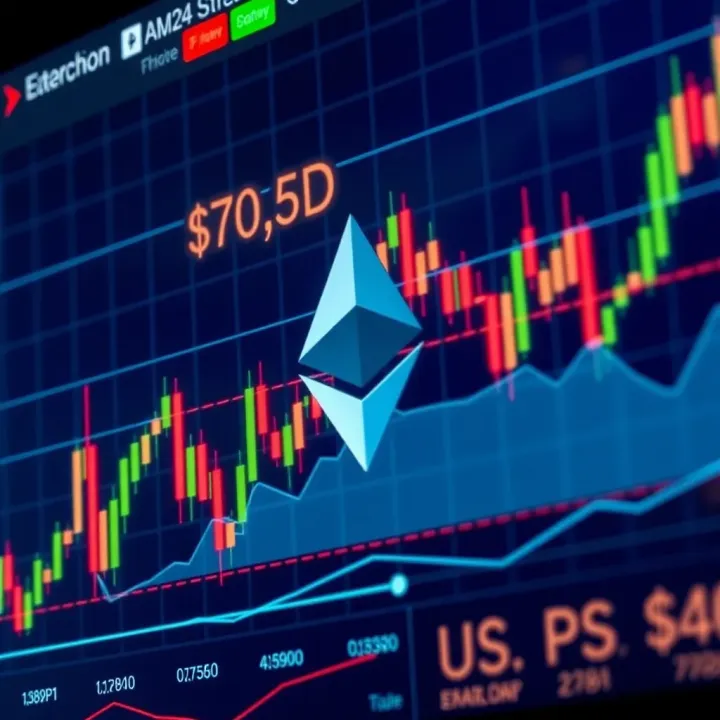
Tracking Ethereum's price live isn't just for speculators. It helps you spot market trends, assess risk, and time your investments better.
Knowing the live price helps you:
React quickly to market changes during high volatility
Compare prices across platforms like WazirX, CoinDCX, Binance India
Execute timely buy or sell orders to maximise profits or minimise losses
Understand price trends influenced by global events or technology updates
Several elements affect Ethereum's real-time price:
Market Demand and Supply: Large buy or sell volumes push prices up or down.
Regulatory News: Announcements by government agencies like SEBI or RBI influence investor confidence.
Technological Developments: Updates to Ethereum's network or partner blockchain projects.
Macro-economic Trends: Inflation rates, currency strength, or global financial stability.
By watching these factors, Indian investors can better grasp when price shifts are temporary or long-lasting.
To monitor prices effectively:
Use well-known crypto exchange apps offering live charts.
Follow cryptocurrency tracking websites that aggregate real-time data.
Set up price alerts or notifications through mobile apps.
These tools provide candlestick charts, trading volume, and price history which aid in technical analysis.
Understanding Ethereum's live price in USD helps traders and analysts navigate the digital currency market with extra confidence, adapting strategies based on up-to-date information. India's growing crypto adoption makes this knowledge especially relevant for local investors aiming to tap opportunities safely and smartly.
Keeping an eye on Ethereum's live price in US dollars is essential for traders, investors, and financial analysts. In a market where values can shift within seconds, real-time tracking helps you seize timely opportunities or avoid potential losses. For example, a sudden price dip might be a good entry point for a short-term trader, while a steady climb signals long-term investors to hold.
Cryptocurrency Exchanges
Exchanges like WazirX, CoinDCX, or Binance India provide the most immediate and reliable Ethereum prices. Since these platforms actualise trades directly, their price feeds reflect market demand and supply closely. For instance, if you place a buy order on WazirX at 9:30 am, the quoted Ethereum price is what you'll practically get. These exchanges allow you to react quickly, especially during volatile trading sessions.
Financial News Websites
Websites such as Moneycontrol or Economic Times offer valuable price updates alongside market analysis. Although they may not refresh prices as rapidly as exchanges, they provide context—like how economic events influence Ethereum's USD value. This helps investors understand why prices move and grasp broader trends affecting the crypto market, making these sites handy for daily portfolio reviews.
Mobile Apps and Widgets
Apps like CoinMarketCap, CoinGecko, or crypto tracking widgets allow quick on-the-go price checks. Their notifications can alert you to price swings, making it easier to monitor Ethereum without constantly checking exchange websites. Given the fast pace of cryptocurrency trading, these apps become indispensable for market watchers wanting timely info in their pocket.
Market Data Aggregation
Live price feeds collect data from multiple sources, mainly cryptocurrency exchanges, to provide an average or best estimated price. Aggregators like CoinMarketCap pull quotes from platforms worldwide, helping present a more balanced view rather than a single exchange’s snapshot. This is critical because relying solely on one exchange could mislead you if it suffers technical glitches or low liquidity.
Price Variations Across Exchanges
Ethereum's price does not stay consistent everywhere. Different exchanges may show slightly different rates due to factors like trading volume, user base, or even geographical restrictions. For example, prices might be higher on an exchange with limited sellers or lower where demand wanes. Being aware of this helps investors choose the best platform for buying or selling and possibly exploit arbitrage opportunities.
Keeping tabs on Ethereum’s price in real time across multiple platforms reduces risks and can enhance investment decisions by offering comprehensive market visibility.
Tracking the live price is no longer a luxury but an essential part of trading or investing in Ethereum, especially when the USD rate impacts your returns directly. Using a combination of exchanges, financial sites, and mobile apps provides the most accurate and timely information to navigate this dynamic market effectively.
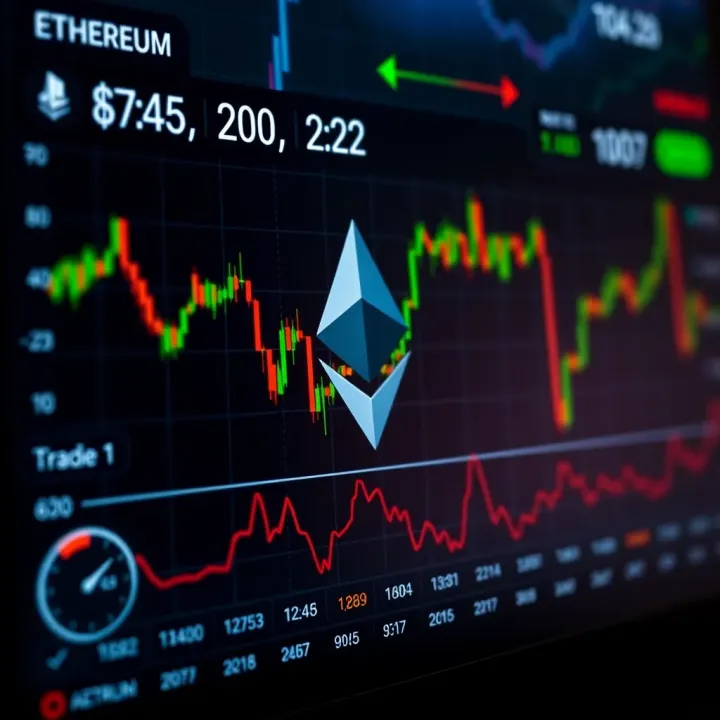
Several factors influence Ethereum's price in USD, shaping how traders and investors approach this volatile asset. Understanding these drivers helps one make informed decisions and gauge market movements effectively.
At its core, Ethereum's price moves primarily because of demand and supply dynamics. When more people want to buy Ethereum than sell, the price rises; when sellers outnumber buyers, the price falls. This simple economic principle gets complicated by speculative trading, institutional interest, and retail investor sentiment. For example, during market hype around decentralised finance (DeFi) projects, demand spikes as users need ETH to pay gas fees, pushing prices upward. Conversely, sudden sell-offs triggered by negative news or profit-taking can create downward price pressure.
Ethereum's evolution through network upgrades substantially impacts its price. The transition to Ethereum 2.0 — shifting from proof-of-work to proof-of-stake consensus — aims to improve scalability, reduce energy consumption, and lower transaction costs. This upgrade, active in phases, signals a more sustainable and efficient future. Investors often react positively to successful milestones as these reduce bottlenecks and attract more users and developers to the ecosystem. For instance, the Beacon Chain launch in 2020 laid the foundation for staking, boosting confidence in Ethereum's long-term value proposition.
The booming sectors of DeFi and non-fungible tokens (NFTs) elevate Ethereum's utility, directly affecting its price. Many DeFi applications require ETH to trade, lend, or borrow assets, increasing demand. Similarly, NFTs—digital collectibles and art tokens—mostly use Ethereum as their transaction base. As platforms like OpenSea and Rarible attract millions, the ETH needed for these trades rises, often pushing price higher. In moments when NFT sales surge, ETH's gas fees and network activity spike, reflecting increased demand.
Government regulations worldwide shape Ethereum's journey and its USD price. Clear or positive regulations may boost adoption, while restrictions or bans can spook investors. For example, announcements from regulatory bodies like the Securities and Exchange Board of India (SEBI) or U.S. Securities and Exchange Commission (SEC) often influence market sentiment. In India, evolving policies regarding cryptocurrency taxation and legality have led to increased caution among investors, affecting demand patterns. Global crackdowns on crypto exchanges often cause temporary price dips.
Ethereum's USD price also reacts to broader economic trends like currency fluctuations and inflation. When the US dollar weakens, cryptocurrencies often serve as alternative stores of value, increasing their appeal. Conversely, a strong dollar might reduce demand. For Indian investors, the rupee's movement against the dollar adds extra conversion risk—meaning changes in the USD/INR rate can affect the effective price paid for Ethereum. Inflation fears also push some investors towards cryptos, viewing them as hedges against fiat money devaluation.
Understanding these key factors gives traders and investors in India and globally an edge, helping to anticipate price moves instead of just reacting to them. By keeping an eye on demand trends, network changes, regulations, and economic shifts, you can better navigate Ethereum's live price fluctuations in USD.
Understanding the historical price trends of Ethereum helps investors and traders make informed decisions based on past performance. Ethereum has seen significant growth since its launch, but with substantial volatility that reflects shifts in market sentiment and external factors. Tracking key milestones and cycles provides insight into how the cryptocurrency has responded to developments in technology, regulation, and global economy.
Ethereum debuted in 2015, priced around $0.30 per token. By mid-2016, it rose to nearly $20, marking the first wave of investor interest linked to smart contract potential. The following year, Ethereum hit its then-record high of about $400 before crashing sharply during the broader crypto market downturn in early 2018. This crash wiped out much of the speculative gains seen in 2017.
The bull run of 2021 brought Ethereum to new heights, surpassing $4,000 for the first time. This surge was driven by increasing adoption of decentralised finance (DeFi) applications and non-fungible tokens (NFTs), which rely heavily on the Ethereum network. Understanding these milestones is critical as each price peak corresponded with specific technological or market events, reflecting adoption trends.
Ethereum’s price history is characterised by sharp swings commonly observed in the cryptocurrency market. The asset typically goes through cycles of rapid appreciation followed by periods of correction, often influenced by hype or regulatory news. Unlike traditional stocks, these fluctuations can be extreme with daily price changes reaching double-digit percentages.
Investors should note that these cycles may repeat but with varying intensity. For example, the 2018 correction lasted over a year, whereas the mid-2023 bear phase showed a quicker rebound. Recognising volatility patterns helps in timing market entry or exit, especially for traders deploying technical analysis.
Historical price trends are not a guarantee of future returns, but they offer valuable perspective on Ethereum's behaviour under varying market conditions.
By analysing Ethereum’s past prices and volatility, investors gain a practical framework to evaluate risk and opportunity. This approach aligns well with strategic portfolio management, especially in volatile Indian financial markets. Understanding historical trends alongside real-time price movements enables better timing for buying or selling in a fast-changing ecosystem.
Ethereum's price data serves as a vital compass for investors aiming to make informed choices. Monitoring real-time and historical prices allows traders and long-term investors to understand market behaviour, spot emerging trends, and time their entry or exit points better. For example, a sudden spike in price accompanied by high trading volume might signal strong demand, prompting short-term traders to capitalise on momentum.
Investors in India, where cryptocurrency continues to see growing interest, should treat Ethereum price data as more than numbers; it reflects market sentiment, technological progress, and global economic shifts. Accurate analysis helps reduce risks and enhances decision-making, especially when combined with other market indicators.
Price charts display Ethereum’s movement over various periods—hours, days, or months. Candlestick charts, popular among traders, reveal the opening, closing, high, and low prices within a time frame, offering insight into market sentiment during that interval. Volume analysis complements price movement by showing the quantity of Ethereum traded. For instance, a price rise with low trading volume might indicate a weak rally, while the same price move backed by high volume suggests robust buyer interest.
Analysing patterns in charts such as support and resistance levels helps investors anticipate potential reversals or breakouts. An Indian investor noticing Ethereum staying above a certain price despite global dips might interpret this as resilience and consider it a buying opportunity.
Market sentiment can swing Ethereum’s price dramatically. News related to regulatory changes, technological upgrades, or large institutional investments can influence trader psychology. For example, when a major update like Ethereum 2.0 is announced, positive sentiment usually drives prices up as investors expect network improvements.
Conversely, negative news like a government crackdown on crypto trading or security breach reports can cause panic selling. Keeping track of timely, reliable news sources helps investors stay ahead. Tools that analyse social media sentiment provide added context, as spikes in discussions often precede price movements.
Short-term trading capitalises on price volatility. Traders buy and sell Ethereum within days or hours to profit from fluctuations. This requires close market monitoring and quick decision-making, making volume and momentum indicators crucial. For example, a day trader in Mumbai might use live volume spikes to execute trades within a single session.
Long-term holding, on the other hand, involves buying Ethereum with the expectation that its value will increase over years. This strategy suits those willing to ride out short-term ups and downs, often influenced by confidence in Ethereum’s technology and adoption. Indian investors benefiting from this approach often use systematic investment plans (SIP) into crypto funds or exchanges.
Stop loss orders help limit losses by automatically selling Ethereum if its price falls to a predefined level. This tool is essential in volatile markets, preventing emotional decisions during sudden downturns. For instance, an investor buying Ethereum at ₹1,50,000 might set a stop loss at ₹1,30,000 to avoid deeper losses.
Target prices define the level at which investors plan to sell and realise profits. Setting realistic target prices based on chart resistance points or expected milestones helps execute disciplined exits. Combining stop loss and target prices creates a risk-reward framework that keeps investment strategies balanced and controlled.
Consistent use of market indicators and clear strategies enables investors to respond effectively to Ethereum’s shifting prices, turning data into actionable investment moves.
For Indian investors diving into the world of Ethereum, understanding practical aspects related to live price tracking is vital. The volatile nature of cryptocurrencies like Ethereum means prices can swing rapidly, so being aware of currency conversion rates and transaction costs helps avoid unexpected losses. This advice ensures investors make informed decisions without surprises related to fees or currency fluctuations.
When monitoring Ethereum prices in USD, Indian investors must consider the forex rate between the US dollar (USD) and the Indian rupee (₹). Since Ethereum is mostly traded against USD on global exchanges, the live USD-INR exchange rate directly affects the rupee value of a transaction. For example, if the Ethereum price rises in USD but the rupee strengthens significantly, the actual gain in INR terms may be lower than expected.
Transaction costs are another key factor. These include trading fees charged by exchanges, withdrawal charges, and any applicable Goods and Services Tax (GST). Some Indian crypto exchanges levy trading fees between 0.1% and 0.5% per trade. Additionally, transferring Ethereum from an exchange to a private wallet attracts network gas fees, which vary according to blockchain congestion. Such costs can pile up, especially for frequent traders or those dealing with smaller amounts.
It is essential to monitor both the conversion rates and associated charges carefully to estimate the true cost of buying or selling Ethereum and the actual profit or loss.
Several Indian exchanges offer a user-friendly way to buy, sell, and track Ethereum, providing live prices in INR alongside USD values. Platforms like WazirX, CoinDCX, and ZebPay have established themselves as reliable options. They offer quick KYC processes, multiple payment methods like UPI and net banking, and reasonable fee structures tailored to Indian investors' needs.
Using domestic exchanges simplifies currency conversion as they automatically convert USD prices to INR based on real-time forex rates. This feature helps investors assess Ethereum's value directly in rupees without manual calculations. Moreover, these platforms provide mobile apps with live price charts, notifications, and portfolio tracking, making quick decisions easier during volatile market phases.
The Indian regulatory environment around cryptocurrencies is evolving. While the Securities and Exchange Board of India (SEBI) has not formally classified Ethereum as a security, the Reserve Bank of India (RBI) had imposed restrictions on banks dealing with crypto businesses, later lifted following Supreme Court intervention. However, RBI continues to caution against crypto risks due to volatility and potential misuse.
For Indian investors, it means staying updated on regulatory changes is critical. Exchanges compliant with SEBI and RBI guidelines tend to offer better protection and transparency. Also, filing Income Tax Returns (ITR) accurately showing gains from cryptocurrency transactions is mandatory, as the government now taxes crypto profits under capital gains.
Keeping track of regulatory updates and selecting exchanges authorised or recognised by Indian authorities helps safeguard investments and ensures adherence to tax norms.
Having realistic expectations on costs, regulations, and platform reliability equips Indian investors to manage Ethereum investments wisely and avoid common pitfalls.
Track Ethereum's (ETH) price trends 📈, understand market factors affecting value, and learn how Indian investors can monitor ETH effectively with easy tools 💹.
📊 Understand Ethereum Classic (ETC) price trends with in-depth analysis of its history, technology, and market sentiment. Get expert views relevant for Indian investors.
Explore Ethereum's future price trends and factors like tech upgrades, market shifts, regulations, and expert forecasts to make informed investment decisions 📈💡
Explore practical steps to trade Ethereum effectively 🔥 Understand market analysis, risk management, strategies, and tools tailored to Indian and global traders.
Based on 9 reviews