

Understanding QX Trading: A Clear Guide
Explore QX trading 📈: its operations, tools, strategies, risks, and regulations to make informed decisions in Indian & global markets.
Edited By
Oliver White
Bitcoin Cash (BCH) was created in 2017 as a direct answer to Bitcoin’s struggle with scalability. Traders and investors felt the pinch when Bitcoin’s transaction fees climbed high and confirmation times stretched during peak trading periods. BCH aimed to ease these problems by tweaking some key technical design choices.
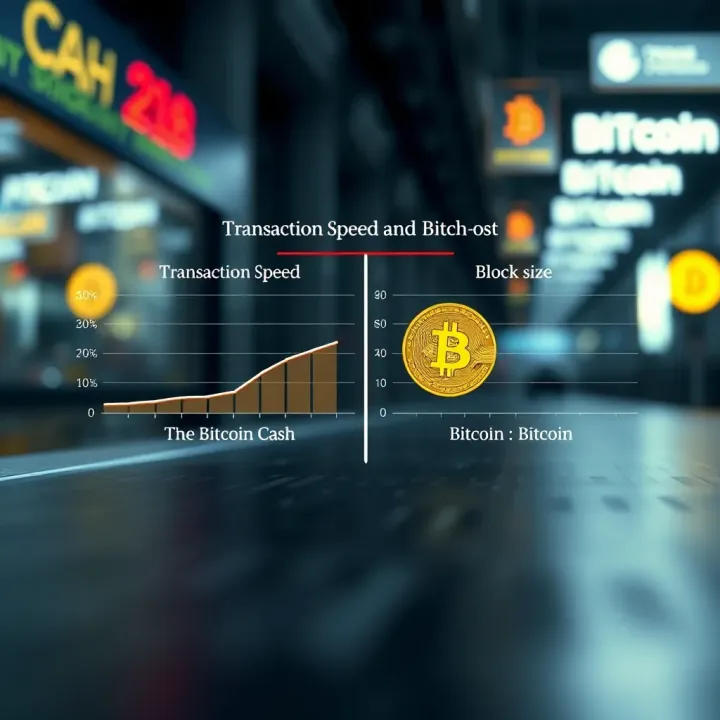
Unlike Bitcoin, Bitcoin Cash increased the block size limit to 8MB initially (and later higher), allowing more transactions to be processed in each block. This tweak reduces congestion on the network, leading to faster transaction times and significantly lower fees — qualities that have attracted many users looking for a practical digital currency to spend or invest.
For Indian investors, particularly those following crypto developments on exchanges like WazirX or CoinDCX, understanding BCH’s niche is essential. It serves not just as an investment asset, but also as a tool for daily transactions where quick and cheap payments matter. Imagine booking a taxi or purchasing groceries online where delays and transaction costs can be a dealbreaker — BCH tackles these pain points nicely.
The technical detail lies mainly in handling on-chain transactions. By increasing block size, Bitcoin Cash supports a larger volume of data per block, which means more transactions per second compared to Bitcoin’s 1MB block size. While Bitcoin works on scaling solutions like the Lightning Network off-chain, BCH’s approach is straightforward and on-chain.
With Bitcoin Cash, the emphasis is on practicality — it’s designed for everyday use rather than just store-of-value speculation.
Key features of BCH include:
Faster transaction confirmations: typically under 10 minutes, often quicker due to less network congestion.
Lower transaction costs: often just a few paise, compared to several rupees or more on Bitcoin during busy times.
Security: BCH uses the same proof-of-work consensus algorithm as Bitcoin, ensuring reliable network security.
Understanding these nuances helps traders and investors evaluate BCH not just as a speculative token but as a functional digital currency. In the following sections, we’ll explore how BCH compares technically to Bitcoin, where you can use it, and the challenges it faces in the ever-evolving crypto landscape.
Understanding Bitcoin Cash (BCH) starts with its origin story—knowing why it was created helps grasp its practical role today. Bitcoin itself faced some serious problems handling a growing number of transactions. This section breaks down those early challenges and explains how Bitcoin Cash emerged as a response, aiming to provide faster and cheaper transactions.
Bitcoin’s original design limits its block size to 1 MB, which restricts the number of transactions that can be processed per block. As adoption increased, this cap caused delays and higher transaction fees. For example, during peak demand around 2017, users waited hours and paid high fees to confirm simple payments. This was a setback for Bitcoin as a daily currency. Scalability issues frustrated investors and merchants alike who wanted smoother, cost-effective transfers.
To tackle this, two groups had contrasting ideas. One favoured solutions like the Lightning Network, an off-chain layer designed to process many small transactions. The other insisted on increasing the block size so more transactions fit into each block on the blockchain itself. Disagreement intensified until, in August 2017, a hard fork split Bitcoin into two: Bitcoin (BTC) maintaining the 1 MB block size with off-chain scaling, and Bitcoin Cash (BCH) increasing the block size to 8 MB initially. This split was controversial but demonstrated how practical concerns about transaction capacity led to BCH’s creation.
Bitcoin Cash launched on 1 August 2017. The initial reaction was mixed. Traditional Bitcoin holders worried this created network confusion and divided liquidity, while BCH supporters hailed it as necessary for real-world use. Over time, BCH carved out its niche, especially among users valuing low fees and faster confirmation times. Some Indian crypto traders found BCH attractive for quick, cost-effective transfers.
Since launch, BCH underwent various upgrades to stay competitive. In November 2018, the block size was raised to 32 MB, further increasing transaction throughput. Technical improvements like Schnorr signatures aimed to enhance privacy and efficiency. Yet, BCH also experienced internal splits—like the creation of Bitcoin SV in 2018—reflecting ongoing debates about scaling and development direction. Tracking these milestones shows BCH’s evolving effort to balance performance with secure, decentralised operations.
Bitcoin Cash’s origin highlights a key crypto dilemma: balancing scalability with security, a challenge that continues to shape its future.
This foundational knowledge equips traders and investors with a clearer lens to assess BCH’s practical value and development trajectory in the wider crypto market.
Bitcoin Cash's technical features form the backbone of its value proposition, particularly its approach to scalability and transaction efficiency. Understanding these features helps traders, investors, and analysts appreciate why BCH can process payments faster and at lower costs compared to Bitcoin.
At the heart of Bitcoin Cash's design is the increase in block size. Whereas Bitcoin’s block size is capped at 1MB, Bitcoin Cash expanded this limit initially to 8MB and later to 32MB. This increase allows each block to carry more transaction data, reducing backlog and congestion during peak periods. For example, during heavy trading times or busy market days, this capacity helps maintain smoother transaction flow without significant delays.

A larger block size directly impacts transaction speed. More transactions are confirmed in each block, which lowers waiting times for users. For practical investors and traders, faster confirmations mean quicker access to funds and better price execution. This feature makes BCH particularly attractive for everyday payments or remittances where waiting even ten or fifteen minutes can be inconvenient.
Bitcoin Cash uses the Proof of Work (PoW) consensus, like Bitcoin. Miners solve complex cryptographic puzzles to validate transactions and add new blocks to the blockchain. This mechanism ensures network security by making it costly to manipulate or rewrite transaction history. India-based analysts monitoring crypto market risks can see that this security model helps uphold BCH’s integrity even as transaction volume climbs.
Decentralisation comes from the network's many nodes spread globally. Each node stores the blockchain copy and verifies transactions independently. Bitcoin Cash’s commitment to this decentralised structure reduces the risk of control by a few miners or corporations. For traders and investors, this decentralisation adds confidence that the network is less prone to censorship or single points of failure.
The combination of increased block size and a strong Proof of Work system allows Bitcoin Cash to process transactions faster without compromising security, which directly benefits real-world use cases and investor confidence.
In summary, these technical features enable BCH to handle larger transaction loads while maintaining robust network protection. This balance is key for its ongoing adoption in payment systems and exchanges across India and beyond.
Bitcoin Cash (BCH) and Bitcoin (BTC) share a common history, but their paths have diverged significantly, especially regarding transaction costs, usage, and development philosophy. Understanding these differences is vital for traders and investors assessing their options in the crypto space.
One major point of difference lies in transaction fees. Bitcoin Cash was designed to keep fees low by increasing the block size limit, which allows more transactions per block. Typically, BCH transactions cost a fraction of a rupee, while Bitcoin fees can spike to ₹100 or more during network congestion. For example, on busy days, Bitcoin fees in India have shot up to ₹300 or ₹400, making small purchases or peer-to-peer transfers impractical. Bitcoin Cash’s lower fees make it more suitable for everyday payments, especially for users in India sending remittances or making microtransactions.
Adoption in payment systems also shows clear contrasts. Merchants and payment processors who prioritise low fees and faster confirmations tend to favour Bitcoin Cash. Several Indian payment gateways support BCH integration for online merchants, enabling quicker settlements compared to Bitcoin’s slower average block confirmation times. Globally, Bitcoin Cash is accepted by merchants ranging from online retailers to gaming platforms, making it a practical choice for payments beyond just investment or speculation. This usability appeal encourages broader adoption among businesses and consumers looking for digital alternatives to traditional payment methods.
The development philosophy of Bitcoin Cash focusses on keeping the network scalable and accessible. Developers and supporters promote BCH as "peer-to-peer electronic cash"—a direct emphasis on payments rather than store of value. This contrasts with Bitcoin’s emphasis on scarcity and security, which often results in slower protocol changes. BCH’s community prioritises practical upgrades that increase transaction throughput and reduce costs, which appeals to businesses and users wanting smooth, affordable transactions for daily use.
Regarding development teams and community, Bitcoin Cash relies on several main groups such as Bitcoin ABC and Bitcoin Unlimited, each contributing to its roadmap and maintenance. The community is smaller but highly engaged, often pushing proposals for straightforward improvements rather than experimental features. This focus on consensus and steady growth contrasts with Bitcoin’s ecosystem that involves numerous large organisations and a bigger, more diverse base. For Indian investors, understanding this active, practical community helps in assessing BCH’s future stability and usability.
Knowing these distinctions helps investors make informed decisions aligned with their priorities—whether it is low-cost everyday use or holding Bitcoin for long-term value.
Bitcoin Cash (BCH) is gaining traction as a practical digital currency for everyday transactions, both in India and internationally. Its faster transaction speeds and lower fees make it appealing for merchants and individuals seeking efficient payment options. This section highlights real-world use cases and the platforms that support BCH, offering a clear picture of how it fits into the broader crypto ecosystem.
Several merchants, especially in regions where digital payments are popular, have started accepting Bitcoin Cash as payment. For example, some e-commerce platforms and boutique stores in metropolitan cities like Bengaluru and Mumbai allow customers to pay with BCH, benefiting from lower transaction charges compared to credit cards or traditional UPI payments. Internationally, businesses focused on low-cost digital remittances, gaming, and online content frequently accept BCH due to its quick confirmation times and minimal fees.
Merchants appreciate Bitcoin Cash because it reduces reliance on traditional financial intermediaries. This is especially useful for small businesses with tight margins, as BCH’s low fees help preserve profitability. For customers, it means smoother transactions when buying goods or services, without waiting for lengthy bank processing.
Peer-to-peer (P2P) transfers form a core use case for BCH, notably for remittances sent across borders. Indians working abroad often face high fees and delays with standard remittance channels. Using Bitcoin Cash can make the transaction faster and cost-effective. For instance, a ₹10,000 remittance that might attract ₹500 to ₹700 in fees through traditional routes may incur just a few rupees in BCH network charges.
The ease of transferring BCH without intermediaries also suits domestic use, making quick payments between friends, family, or business partners straightforward. In rural parts of India where banking infrastructure is limited, BCH-based transfers can act as a practical substitute to cash or slower digital options.
Several crypto wallets popular in India fully support Bitcoin Cash, making it easy for users to store and transact BCH. Apps like WazirX, CoinDCX, and ZebPay allow users to buy, sell, and manage BCH securely. Moreover, global wallets such as Coinomi and Trust Wallet also support BCH and are widely used by Indian users due to their user-friendly interfaces and security features.
Having these wallets locally available means Indian investors can conveniently add BCH to their portfolios or spend it without hassle. Wallets that integrate with UPI or support bank withdrawals streamline the user experience further, encouraging wider adoption.
Bitcoin Cash is listed on most major Indian cryptocurrency exchanges, including WazirX, CoinDCX, and ZebPay. These platforms offer BCH trading pairs with INR and other cryptocurrencies, providing ample liquidity for buyers and sellers.
Exchanges play a critical role in BCH adoption by offering dependable access and support for Indian users. They provide easy onboarding and withdrawal options, often allowing investors to move remittances into BCH and convert them back to INR when needed. This seamless exchange experience contributes to BCH’s growing use in India’s crypto space.
Bitcoin Cash’s practicality shines in its daily usability — from merchant payments to fast peer transfers — helped by a growing network of wallets and exchanges tailored for Indian users.
By understanding these practical aspects, traders, investors, and analysts can better gauge BCH’s real-world potential and identify where it might fit in their strategies or portfolios.
Bitcoin Cash (BCH) faces a range of challenges and criticisms that traders, investors, and analysts should understand before engaging with the cryptocurrency. These concerns influence its market value, user adoption, and long-term viability. Examining BCH’s position relative to other cryptocurrencies as well as addressing its technical and security issues can help you make better decisions.
Bitcoin Cash was created to offer faster and cheaper transactions than Bitcoin but competes in a crowded field. Unlike more established or specialised cryptocurrencies like Ethereum (for decentralised apps) or Ripple (for cross-border payments), BCH primarily aims to function as digital cash. However, this niche faces rivalry from other faster and low-fee coins such as Litecoin and Stellar. These competitors often enjoy stronger developer communities or partnerships, which can affect BCH’s market appeal.
From a practical standpoint, BCH’s ability to retain and grow its user base is tied to how well it distinguishes itself amidst these rivals. Traders should closely track BCH’s volume against these coins to gauge market confidence and liquidity.
Volatility and liquidity present additional hurdles. BCH can experience notable price swings, especially during broader cryptocurrency market downturns or regulatory uncertainties. Compared to Bitcoin, which has deeper liquidity and greater institutional backing, BCH’s liquidity is variable. This can result in wider bid-ask spreads, making large trades more costly or risky. Such volatility is critical for investors who rely on timely buying and selling and traders using technical analysis.
The BCH network has faced network attacks and vulnerabilities that concern analysts and users. For instance, in past years, 51% attacks occurred where malicious actors temporarily gained majority control over the network hashing power. This allowed them to reverse transactions or double-spend coins, undermining trust. Although BCH developers respond with upgrades and security patches, such incidents highlight risks that traders and exchanges must monitor.
A key debate also revolves around which scaling solutions BCH should adopt. While BCH advocates for larger block sizes to handle more transactions, critics argue that this approach could increase centralisation risks, as running a full node might become expensive for smaller operators. Others push for layer-2 solutions like the Lightning Network, favoured more by Bitcoin itself. This ongoing disagreement over how to scale impacts BCH’s technical roadmap and affects investor confidence, as future upgrades remain uncertain.
Keeping an eye on BCH’s technical developments and security status can reveal how well it manages these concerns, which directly influences its market stability.
In sum, understanding these challenges and criticisms equips investors and analysts to see BCH in a realistic light, weighing its strengths against inherent risks and competition. Such clarity can improve strategic decisions in the Indian crypto ecosystem and beyond.
Understanding the future of Bitcoin Cash (BCH) is critical for anyone involved in trading or investing in cryptocurrencies. This section explores upcoming changes and challenges for BCH and their potential impact on its market position and utility. For Indian investors, keeping an eye on these developments helps make more informed decisions amid India's evolving crypto landscape.
Planned technical improvements for Bitcoin Cash focus on enhancing scalability and security to maintain low fees and fast transactions. One such upgrade is the implementation of Schnorr signatures, which improves privacy and allows transaction batching. This can reduce the amount of data stored on the blockchain, making the network more efficient and lowering costs further. For traders and analysts, such technical upgrades may translate into more reliable and cost-effective payment methods.
Community proposals continue to shape BCH's roadmap. Debates often centre on balancing innovation with maintaining the original vision of BCH as a peer-to-peer electronic cash system. For example, some community members push for smart contract capabilities, which could unlock new use cases such as decentralized finance (DeFi). However, others caution that these features could complicate the protocol and increase risk. Tracking these discussions offers insights into where BCH might head and how it could affect adoption and value.
The regulatory environment in India plays a major role in shaping BCH's future in the country. Although the government has yet to finalise a comprehensive crypto policy, the current inclination towards regulation instead of outright bans is encouraging. Positive regulatory signals, such as clear guidelines for taxation and KYC norms, could spur institutional interest and wider usage. However, any sudden changes in regulations might cause volatility and hesitancy among Indian investors.
Adoption trends among Indian users reflect growing interest in cryptocurrencies as investment and payment options. Increasing support for BCH in Indian exchanges and wallets improves accessibility. Additionally, merchants in metro and tier-2 cities adopting BCH for transactions hint at gradual real-world acceptance. For brokers and financial advisors, recognising these trends can help advise clients better, especially regarding market entry timing and risk assessment.
Tracking Bitcoin Cash's future developments and its position within India's regulatory and market framework enables investors and analysts to anticipate shifts and seize opportunities effectively.
Explore QX trading 📈: its operations, tools, strategies, risks, and regulations to make informed decisions in Indian & global markets.

Discover Rifa FX in forex trading: features, benefits, risks, regulatory insights, and tips for beginners to trade smartly 🌐💹📊

Explore how to earn with Quotex referral program 💸! Learn eligibility, payment methods, tips, and FAQs to maximize your income in India 🇮🇳.
Explore how Quotex PNG images boost trading platform interfaces 📊 Learn tips to manage, customize, and solve common issues with these essential files 🖼️
Based on 6 reviews