

Top Competitors of Starbucks in Global and Indian Markets
☕ Explore key global & Indian coffee chains competing with Starbucks, their unique blends, strategies & growth in India's dynamic café market scene.
Edited By
George Mitchell
Boeing stands as a key player in the global aerospace sector, facing stiff competition from several established and emerging companies. Its rivals vary across the commercial aviation and defence sectors, shaping the dynamic and complex market environment.
In commercial aviation, Airbus emerges as Boeing's fiercest competitor, dominating with its A320 and A350 families. Airbus has managed to capture significant market share, especially among international carriers, by focusing on fuel efficiency and modern cabin comfort. Meanwhile, companies like Embraer and Bombardier cater to regional and smaller aircraft segments, expanding their presence in niche markets where Boeing has less influence.

In defence aerospace, Boeing competes against firms like Lockheed Martin and Northrop Grumman from the US, as well as BAE Systems and Dassault Aviation in Europe. These players vie for defence contracts related to fighter jets, surveillance aircraft, and military transport. Boeing’s integrated defence systems and global supply chains provide advantages but must continually adapt to evolving geopolitical and technological demands.
Emerging challengers in the aerospace field include Chinese companies like COMAC (Commercial Aircraft Corporation of China) and Russian aerospace giants such as United Aircraft Corporation. Though their global footprints remain limited compared to Boeing, their growing ambitions and government backing could reshape competitive dynamics, especially in Asia.
Investors need to monitor these competitors closely, as shifts in market leadership can directly impact Boeing’s stock performance and long-term prospects.
Technological innovation: Advancements in lightweight materials, fuel-efficient engines, and avionics confer advantages in cost and performance.
Global supply chain resilience: Disruptions can affect production schedules and delivery times, influencing customer relations.
Geopolitical ties: Defence contracts often hinge on government policies and international alliances.
Market diversification: Expanding into emerging markets helps companies balance demand fluctuations in mature regions.
Understanding Boeing’s competitive landscape provides vital insight for anyone tracking the aerospace sector’s financial and strategic shifts. It also highlights opportunities and risks that come with investing in or analysing Boeing and its rivals.
Boeing's market presence sets the stage for understanding its standing in the global aerospace sector. Investors and analysts keen on aerospace industry trends must grasp Boeing's dual strength in commercial and defence aviation, as this influences competition and market dynamics significantly. Boeing’s footprint in various segments highlights the areas where it faces stiff challenges or holds competitive advantage.
Boeing is well-known for its range of commercial aircraft, including the widely used 737, 777, and 787 Dreamliner series. These models serve different market needs—from short-haul low-cost flights to long-haul international routes. Apart from aircraft manufacturing, Boeing also offers services such as maintenance, training, and parts supply. This integrated approach helps airlines reduce downtime and manage operating costs effectively.
Boeing commands a significant share in the commercial aviation sector, though it has faced pressure from rivals like Airbus in recent years. Globally, Boeing has held approximately 30-35% of the commercial aircraft market depending on the year and segment. Shifts in this share can impact Boeing’s revenue streams and influence investor confidence, especially when production delays or regulatory hurdles arise.
Boeing counts major airlines like Emirates, American Airlines, and Air India among its key customers. Beyond airlines, the company partners with extensive supply chains and maintenance networks worldwide. These relationships ensure a steady demand pipeline and collaborative innovation. For financial analysts, Boeing’s network signals resilience and market penetration.
This division supplies fighter jets, military helicopters, and surveillance aircraft such as the F/A-18 Super Hornet and Chinook helicopters. Defence contracts often involve long-term engagements with governments, providing Boeing stability beyond the cyclical commercial market. For investors, this segment can offset uncertainties in civil aviation during global downturns.
Boeing contributes significantly to NASA’s projects, including the Space Launch System (SLS) and the International Space Station’s (ISS) components. Its ventures into space technology mark a strategic diversification and position Boeing for future opportunities as governments and private firms increase spending in space exploration.
Boeing’s strong ties with the US Department of Defense and allied nations reinforce its position in the defence sector. These contracts include missile defence systems and satellite technologies, often involving multi-year budgets and cross-country collaborations. Such deals provide Boeing with predictable revenue and technological edge.
Boeing’s diverse market presence across commercial aviation and defence makes it a complex but compelling player to watch for anyone engaged in aerospace investments or market analysis.
This overview helps frame Boeing’s competitive environment and prepares the reader for deeper exploration of its rivals and market forces in later sections.
Understanding Boeing's commercial aircraft competition helps traders and investors gauge market shifts better. The commercial segment drives significant revenue and innovation in aerospace, as airlines worldwide update fleets to balance fuel efficiency with passenger comfort. Knowing key players' offerings and strategies sheds light on Boeing's relative strengths and risks.
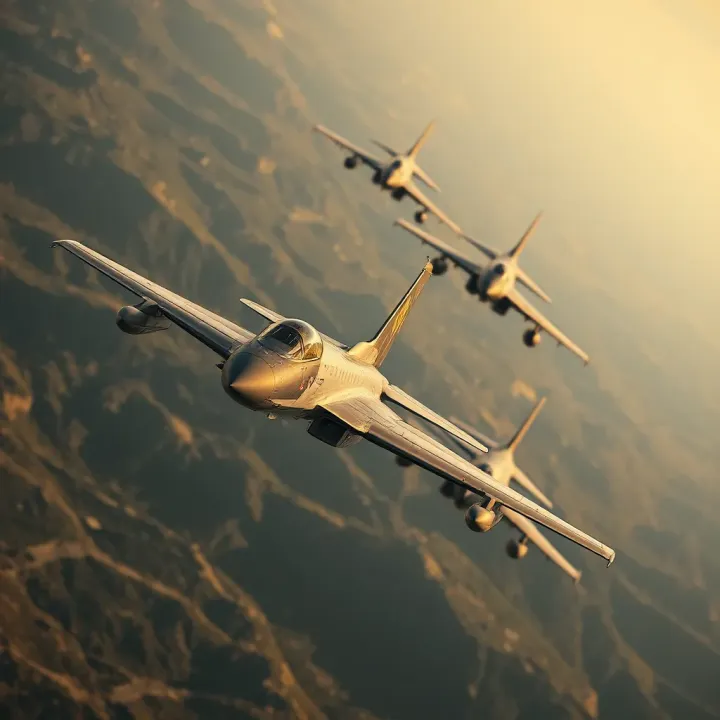
Airbus matches Boeing across most segments, fielding popular models like the A320 family, A350, and A380. The A320 series competes directly with Boeing's 737, dominating short to medium-haul flights. For long haul, the A350 rivals Boeing's 787 and 777 families with advanced aerodynamics and lower operating costs. Airbus, unlike Boeing, pushed the superjumbo A380, though it recently halted production due to limited market demand. This lineup breadth allows Airbus to cover airlines’ varied needs, an edge influencing many orders.
Airbus holds roughly 50-55% of the single-aisle aircraft market globally, slightly ahead of Boeing’s 40-45%. It benefits from strong orders in Europe, Asia, and emerging markets, including leasing companies and government-backed carriers. The company’s manufacturing bases across Europe, the U.S., and China give it supply chain diversity, which is useful when trade tensions rise. For investors, Airbus’s solid market share signals a firm competitor limiting Boeing’s growth, especially as some airlines lean towards diversification amid geopolitical uncertainties.
Airbus invests heavily in materials and avionics tech. For instance, its widespread use of carbon-fibre composite in the A350 reduces weight and fuel burn. Its cockpit design emphasises commonality across models, cutting pilot training costs. Airbus also explores hydrogen-powered concepts aiming to meet tighter future environmental norms. Such advances challenge Boeing to upgrade its design and production processes aggressively, directly impacting product competitiveness and future valuation.
China's COMAC (Commercial Aircraft Corporation of China) targets domestic dominance with planes like the C919, designed to rival Boeing 737 and Airbus A320 models. Though still gaining certifications and market confidence, COMAC benefits from strong government backing and a vast internal market that prioritises local manufacturing. For investors, COMAC’s growth could redefine regional supply chains and pricing structures, especially as China looks to reduce reliance on Western aerospace firms.
Brazil’s Embraer specialises in regional jets with capacities between 70-130 seats, a niche where Boeing has limited presence. Its E-Jet E2 family offers fuel-efficient alternatives suited to tier-2 city routes and short-haul flights popular in India and South Asia. Embraer’s focus provides airlines strategic flexibility and affordability, indirectly influencing the market share battles above the 150-seat segment.
Russia’s Sukhoi and Irkut target regional and narrow-body jet markets with aircraft like the Superjet 100 and MC-21. Both face challenges in certification and western market acceptance but hold sway in countries aligned geopolitically or with limited access to Western aircraft. They add complexity to Boeing’s competition landscape, mainly due to state support and emerging alliances in Asia and Africa.
The diversified nature of commercial aircraft manufacturers means Boeing’s competitive pressure comes not just from established players but from emerging markets shifting aerospace geopolitics. Monitoring these trends aids traders and analysts in anticipating stock movements and industry shifts.
Overall, understanding commercial aircraft competitors clarifies where Boeing stands amid evolving demands, technological progress, and international industry dynamics.
Competition in defence and aerospace technologies shapes Boeing’s position beyond commercial aviation. Defence aviation demands a different set of capabilities — sophisticated fighter jets, missile systems, and government contracts become critical. Understanding Boeing’s rivals here helps investors and analysts assess where market pressures and opportunities stand.
Lockheed Martin commands a leading spot through its production of advanced fighter jets and military aircraft. Its F-35 Lightning II, for example, is widely deployed across allied defence forces and favoured for stealth, avionics, and multirole capabilities. This aircraft competes directly with Boeing's F/A-18 and other tactical jets, impacting Boeing’s defence segment revenues and backlog.
Besides fighter jets, Lockheed Martin develops transport and reconnaissance aircraft supporting military logistics and surveillance. The breadth of their aircraft lineup ensures diversification, which Boeing has to match to stay competitive.
Lockheed Martin also invests heavily in missiles and integrated defence systems. Their portfolio includes precision-guided munitions like the Javelin anti-tank missile, as well as air defence systems such as THAAD (Terminal High Altitude Area Defense). Such systems complement fighter jets in combat scenarios and are a significant revenue source for the company.
These defence systems often win contracts on technological superiority and reliability. For Boeing, competing in this segment means continually upgrading capabilities and offering integrated solutions beyond airframes.
Government defence contracts form the backbone of Lockheed Martin's business, bringing assured revenue through long-term programmes funded by the US and allied governments. These contracts typically cover development, production, and lifecycle support, providing stable cash flow and facilitating reinvestment in R&D.
Contract wins also demonstrate trust and political alignment, factors closely watched by investors tracking Boeing's competitive environment. The cyclicality and scale of these contracts influence market valuations and strategic planning.
Northrop Grumman specialises in advanced technologies, notably unmanned systems and stealth bombers like the B-21 Raider. Their expertise in electronics, sensors, and autonomous solutions puts them at the frontier, a niche Boeing aims to expand within.
Their growing focus on space and cyber defence gives Northrop an edge in emerging warfare domains. For Boeing, keeping pace with such advanced tech players is key to retaining government and defence sector contracts.
Raytheon Technologies offers a vast defence portfolio, ranging from missile systems to avionics and cybersecurity. Its Tomahawk cruise missiles and Patriot air defence systems are globally recognised, providing Raytheon with deep government ties and recurring revenues.
This diversity allows Raytheon to weather defence budget fluctuations better and innovate in integrated defence solutions. Boeing's challenge is to leverage its aerospace heritage while enhancing capabilities in electronics and weapon systems to rival Raytheon's offerings.
European players like Thales Group combine defence electronics, aerospace systems, and communication networks. Their collaborations with multiple European governments position them as strong competitors in both defence aviation and system integration.
Thales's strength lies in providing turnkey solutions, including radar, avionics, and command and control platforms. For Boeing, cooperation or competition with such European firms affects its ability to access certain global markets and multinational contracts.
In summary, Boeing faces robust competition from specialised defence companies that excel in particular technologies, from fighter jets to missile systems and advanced electronics. These rivals influence Boeing's strategic priorities, government partnerships, and innovation focus in the aerospace and defence sectors.
Competition in aerospace hinges on many factors that shape market dynamics, product differentiation, and strategic positioning. Understanding these drivers is key for investors and analysts who want to gauge how Boeing and its competitors evolve. This section highlights technological and geopolitical elements that decisively affect how companies perform and compete globally.
Fuel efficiency and environmental standards play a direct role in aircraft design and operational costs. Airlines increasingly demand planes that consume less fuel, reducing expenses and carbon footprint. For example, Boeing’s newer models like the 737 Max include advanced engine technologies improving mileage, helping airlines meet tough emission norms, especially in regions like the EU and India. This creates a competitive edge as fuel costs often account for up to 30-40% of airline expenses.
Digital and automated flight systems have transformed cockpit operation and safety. Modern planes come equipped with fly-by-wire controls and autopilot systems that reduce pilot load and human error. Companies integrating AI-based predictive maintenance also reduce downtime, which appeals to operators keen on maximising fleet availability. Airbus’s A350 and Boeing’s 787 Dreamliner each showcase such integrated digital systems, raising the bar for industry players.
Materials and manufacturing processes affect aircraft weight, durability, and production speed. Using composites like carbon fibre lowers overall weight, directly improving fuel efficiency. Both Boeing and Airbus heavily invest in such materials. Additive manufacturing (3D printing) also speeds up producing complex parts, helping cut down costs. Manufacturing innovations thus influence competitiveness by balancing quality, cost, and delivery timelines.
Trade policies and international relations often decide supply chains and market access. Tariffs, export restrictions, or sanctions can limit Boeing's ability to sell in countries like China or Russia, where local manufacturers gain room to grow. For instance, rising tensions have allowed COMAC to push its aircraft domestically. Hence, understanding diplomatic shifts helps investors anticipate market risks and opportunities.
Shifting customer demands are also pivotal. Airlines now prefer smaller, fuel-efficient jets suitable for point-to-point travel over traditional hub-and-spoke models. This impacts product strategies; Embraer’s regional jets gained traction by aligning with this trend. Similarly, defence customers expect multi-role aircraft adaptable to various missions, changing requirements for defence primes including Boeing.
Impact of defence budgets shapes the defence aviation sector heavily. Government spending cycles and priorities directly influence orders for fighter jets, transporters, and missile systems. Budget cuts often lead companies to diversify commercial efforts or innovate cost-effectively. For example, India’s increasing defence allocation has attracted foreign defence manufacturers, altering the competitive landscape, whereas defence budget freezes in some Western countries pose challenges.
Recognising these factors allows traders and financial analysts to understand why aerospace firms accelerate certain innovations or pivot markets, offering clearer insight into future valuations and risks.
Looking ahead, Boeing faces a landscape marked by increasing competition and rapid innovation. The company’s ability to adapt its strategies around product development, partnerships, and market response will determine its success. Investors and analysts need to watch how Boeing navigates these challenges because this will influence its market share and financial outlook.
Product development strategies play a vital role as Boeing strives to deliver aircraft that meet evolving customer needs and regulatory standards. Currently, the industry is pushing towards fuel-efficient planes and advanced digital systems, meaning Boeing must continuously innovate to stay relevant. For example, the development of the 777X with improved aerodynamics reflects Boeing's commitment to fuel savings and operational efficiency, catering to airlines that seek reduced costs per flight.
Beyond just new models, Boeing’s product strategy includes upgrading existing aircraft with better avionics and materials to extend lifecycle value. This approach not only answers competitor offerings but also aligns with airline demands for lower maintenance costs and improved passenger comfort.
Partnerships and alliances remain critical for Boeing to strengthen its global footprint and access new markets. Collaborating with suppliers, technological firms, and governments allows Boeing to share risks and integrate advanced technologies faster. For instance, Boeing’s alliance with Rolls-Royce for engine technologies illustrates how such partnerships help improve fuel efficiency and reliability.
In the Indian context, joint ventures or collaborations with local aerospace companies could help Boeing in regulatory navigation and cost optimisation. These alliances also help in tailoring products to specific regional needs, which can be a strong competitive advantage.
Responding to emerging market entrants such as COMAC from China or the Russian manufacturers requires vigilant monitoring and agile strategic adjustments. These companies often benefit from government backing, providing them a strong push in price competitiveness and market access.
Boeing must balance defending its established markets with exploring growth opportunities in emerging regions. Adapting to these new entrants means not just competing on product quality but also on price, delivery timelines, and after-sales service excellence.
Environmental regulations in aviation are tightening globally due to rising climate concerns. Boeing will need to invest heavily in technologies that reduce carbon emissions and noise pollution. Stricter rules from authorities like the International Civil Aviation Organization (ICAO) impact aircraft design and operations.
Fuel efficiency standards and emissions limits push Boeing to innovate in engines and lightweight materials. Failure to comply could result in penalties or restricted access to certain markets, directly affecting financial performance.
Cleaner technologies and alternatives such as sustainable aviation fuels (SAF), electric propulsion, and hybrid engines are gaining traction. Boeing is reportedly exploring SAF partnerships and electric plane prototypes, signalling a shift towards greener aviation.
For investors, the degree to which Boeing adopts and scales these technologies will influence its long-term viability, especially as airlines increasingly prefer environmentally responsible suppliers.
Compliance with global aviation standards is non-negotiable and involves rigorous certification processes. Boeing’s past challenges, including the 737 Max grounding, highlight how regulatory hurdles can disrupt production and damage reputation.
Remaining in sync with agencies like the Federal Aviation Administration (FAA) and European Union Aviation Safety Agency (EASA) requires continuous quality management and transparent communication. This compliance ensures Boeing’s products remain authorised for sale worldwide, which is crucial for maintaining steady revenue streams.
How Boeing manages innovation and sustainability today will shape its competitive stance tomorrow. Market watchers should closely track its product pipeline, strategic partnerships, and response to environmental regulations to gauge future performance.
This outlook equips investors and analysts with context on the pressures and opportunities Boeing faces, helping in informed decision-making.
☕ Explore key global & Indian coffee chains competing with Starbucks, their unique blends, strategies & growth in India's dynamic café market scene.

📈 Explore gold rate forecasts by analysing trends, factors & market outlook. Understand how global & Indian events influence gold prices for smart investing decisions.

Understand causes, symptoms & treatment of anemia in children. Get practical nutrition tips for growth, prevention & effective management. 🩸👶📋

📊 Curious if binary trading is legal in India? Understand regulations, risks, and safer investment options in this clear guide tailored for Indian investors 🇮🇳
Based on 10 reviews