
Forex Trading Demo Apps: Beginner's Guide
Explore how forex trading demo apps help beginners practise currency trading risk-free using real market conditions. Learn features, benefits, app choice, & tips 📱💹
Edited By
Grace Mitchell
Demo share trading offers a safe environment to practise buying and selling stocks without risking real money. This approach is invaluable for beginners who want to understand market mechanics and build confidence before venturing into live share trading.
In India, where the stock market can be volatile and sometimes intimidating for new investors, demo trading simulates real market conditions using virtual money. This allows you to experience stock price fluctuations, order executions, and portfolio management firsthand.
Using a demo trading platform, you can test strategies, monitor market trends, and familiarise yourself with brokerage tools without worrying about financial loss.
Unlike reading theory or watching market news, demo trading gives you practical exposure. For example, if you are keen to buy shares of Reliance Industries or Tata Motors, demo platforms let you place buy or sell orders just like the real stock exchanges. Your performance can then be reviewed to see what worked or what did not.
Main advantages of demo trading include:
Risk-free learning — no actual money involved.
Understanding order types like market, limit, and stop-loss orders.
Testing investment strategies based on Indian market behaviours.
Gaining familiarity with trading software interfaces and charts.
By starting with demo trading, you can avoid costly mistakes that often happen due to emotional decisions or lack of experience. Many Indian brokers such as Zerodha and Upstox offer demo accounts, making it accessible.
In the next sections, we will look at how to select a suitable demo platform, common pitfalls to avoid, and practical tips to transition smoothly into actual trading using real funds. This methodical approach is especially important for traders and investors aiming to participate actively in NSE or BSE markets while managing risk effectively.
Demo share trading serves as a training ground for investors and traders who want to understand the stock market without risking their hard-earned money. It simulates real trading conditions using virtual money, allowing participants to make trades, monitor movements, and test strategies with real-time data.
This approach is especially helpful for beginners in India who are still finding their feet in a market governed by rules set by the Securities and Exchange Board of India (SEBI) and influenced by indices like the Sensex and Nifty. By practising in a simulated environment, new traders can grasp concepts like market volatility, price fluctuations, and order executions without financial consequences.
Demo trading platforms mimic the live markets, replicating stock prices, trading volumes, and order book dynamics closely. For example, Zerodha’s Kite demo allows users to buy and sell shares as if they are trading on the actual National Stock Exchange (NSE). This environment makes it easier to experience market conditions firsthand and understand how news or economic events impact stock prices without real financial exposure.
Such simulations provide a practical learning space where users can experience the pace and rhythm of stock trading, which textbooks can hardly capture. Even intricate elements, such as intraday price swings or futures trading, become less intimidating when observed within this realistic setting.
With demo trading, investors can take risks and make mistakes without facing money loss. This risk-free setup encourages experimentation with different trading strategies and tactics that may feel too risky in a live setting. For instance, a trader can try momentum or swing trading techniques using virtual funds and assess how they perform over days or weeks.
This space removes the anxiety linked to losing actual funds, which often clouds judgement during real trading. Beginners can build their decision-making skills gradually, identifying which strategies suit their risk tolerance and trading style before stepping into live markets.
Most platforms allocate a fixed amount of virtual capital, say ₹5 lakh, for users to trade. This allows investors to manage portfolios and allocate funds just as they would with real money. For example, if a user invests ₹1 lakh in Tata Motors shares on the demo platform, the virtual portfolio updates balance and profit/loss accordingly.
This feature helps beginners learn money management, position sizing, and portfolio diversification. They get to understand how much capital to assign per trade and see the impact of those choices without the worry of a real financial hit.
A key strength of demo accounts is the use of live market data from NSE and Bombay Stock Exchange (BSE). This means the prices you see and trade on mirror those in the actual market, capturing intraday volatility and real-world price movements.
Because of this, practising on a demo platform is not just about theory but a practical exercise in reacting to current market conditions. For example, if the Reserve Bank of India (RBI) announces a change in repo rate, users can observe its effect immediately on banking stocks, helping link economic events with price action.
Demo platforms support various order types like market orders, limit orders, stop loss, and bracket orders. This detailed simulation helps traders understand the potential outcomes and execution processes tied to each order type.
For example, placing a stop loss order during a demo trade teaches how to limit losses if a stock price falls below a certain level. Experiencing execution speed and order matching teaches the nuances of trade placement without the fear of slippage or unexpected delays harming real portfolios.
Practising all these features allows new traders to build familiarity with trading mechanics, risk management, and market behaviour — key components needed before moving to live trading.
Demo share trading offers a practical and risk-free way for beginners to enter the stock market. It lets you understand stock behaviour, test ideas, and get hands-on experience without spending real money. This means you can learn the ropes comfortably before stepping into live markets, where mistakes can become costly.
Demo trading allows beginners to observe how prices fluctuate throughout the day and how various factors like company announcements or economic news impact shares. For example, you might see a blue-chip stock dip after poor quarterly results, helping you grasp cause and effect. This ongoing exposure sharpens your sense of market trends and volatility, which are vital for timing buys and sells.
Apart from theory, executing trades confidently requires familiarity with the process. Using demo platforms, you can practise placing market orders, limit orders, and stop losses just as you would in real trading. Suppose you want to buy shares of Infosys; practising the exact steps in a safe environment helps avoid costly errors, like placing the wrong quantity or missing out on price limits, during live trading.
Trying out different trading approaches takes patience and trial. Demo trading enables this with zero financial exposure. You can experiment with day trading, swing trading, or long-term investing strategies without worrying about losing money. For instance, testing a momentum-based strategy on Reliance Industries’ shares lets you see how well it performs under current market conditions.
When a strategy doesn’t work as expected in demo mode, you get a chance to tweak your approach. If a particular trading pattern fails repeatedly, you can review entry and exit points or adjust stop loss settings without financial stress. Over time, this feedback loop improves your strategy’s robustness before applying it to real trades.
Trading platforms can be complex at first. Demo accounts help you explore dashboards, charts, and tools at your own pace. You become comfortable reading technical indicators like moving averages or RSI (Relative Strength Index) and using drawing tools, making it easier to make decisions quickly in live markets.
Besides navigation, understanding the order placement process is vital. Whether you're buying on the NSE or BSE, demo platforms teach you how to enter buy or sell orders, set quantities, and choose order types. They also show how to track open positions and monitor your portfolio, so you know how to keep tabs on your investments effectively.
Practising with demo trading isn't just about avoiding losses—it builds a solid foundation so you trade smarter and more confidently when real money's on the line.
Selecting the right demo trading platform can shape your learning experience and readiness for live trading. In India, the variety of platforms reflects the market's growth and the need for realistic practice. The key is to find a platform that closely mirrors real conditions to build skills effectively.
Accurate market data means the demo platform shows prices, volume, and trends nearly identical to live markets. This matters because trading decisions depend on reliable information. For instance, a 1% price lag or difference can change your entry or exit points, potentially distorting your practice trade outcomes. Platforms offering data directly linked to NSE (National Stock Exchange) or BSE (Bombay Stock Exchange) provide more precise simulations.
A straightforward user interface helps beginners focus on learning trading rather than grappling with complex menus. Indian traders often prefer platforms with clear charts, easy navigation, and quick access to order placement. For example, mobile-friendly designs work better for investors in tier-2 cities who might rely on smartphones more than desktops. Smooth usability reduces frustration and allows you to practise executing trades under realistic time pressure.
Having a demo platform that includes popular Indian stocks and indices like Sensex and Nifty 50 is crucial. This lets you understand the nuances of Indian markets, sector-wise movements, and stock-specific news impacts. Practising with stocks like Reliance Industries or Infosys on the platform makes your learning directly applicable. Plus, some platforms offer futures and options on Indian indices, which is helpful for traders exploring derivatives.
Zerodha’s Kite offers a user-friendly demo account that loads real-time market prices from NSE and BSE, reflecting actual market movements promptly. It supports order types such as market, limit, and stop-loss, helping users simulate real trading strategies thoroughly. Its API integration option is also handy for those curious about algorithmic trading. Moreover, the clean interface with multiple charting tools makes learning technical analysis easier.
Upstox Pro provides a demo that closely resembles its live trading platform. It features robust charting with indicators popular among Indian traders, such as MACD and RSI. The demo supports trading across equities, commodities, and currencies, allowing users to practise different markets. Additionally, its platform runs smoothly even on lower bandwidth connections, which is a significant advantage for investors in regions with connectivity issues.
Several RBI-approved brokers like Angel Broking and 5Paisa also offer reliable demo accounts. These platforms often include features tailored to the Indian regulatory environment, such as integrated PAN and Aadhaar details for practice. They ensure realistic order execution simulations within SEBI (Securities and Exchange Board of India) regulations. Such platforms help traders familiarise themselves with compliance aspects alongside market mechanics.
Choosing a demo platform wisely equips you with practical exposure to Indian market conditions, reducing surprises when you switch to live trading.
In summary, pay close attention to market data accuracy, platform usability, and Indian market coverage when selecting a demo account. Zerodha’s Kite and Upstox Pro stand out for their balanced features, but RBI-regulated brokers’ demos deserve a look too. This approach helps you build confidence and skills with minimal guesswork.
Demo trading is a valuable tool for budding investors to gain hands-on experience without risking real money. However, common mistakes during this phase can create false confidence or misleading habits that affect actual trading performance. Recognising and avoiding these pitfalls is essential for a smoother transition to live markets and better long-term results.
The biggest difference between demo and real trading is the emotional tension tied to actual money on the line. In a demo account, losses don't pinch your pocket, so your decisions tend to be more relaxed or experimental. Real trading, by contrast, confronts you with the fear of losing your hard-earned savings, which can trigger stress or hesitation. This emotional weight often affects trade timing, position sizing, and risk tolerance in ways a demo environment cannot simulate.
For example, a trader might confidently buy a stock in demo mode, knowing a loss won't hurt. But in reality, the same trader may delay exit decisions due to fear of crystallising losses. This emotional gap means demo success doesn't always translate directly to real market behaviour.
Demo accounts encourage frequent trades because there are no real repercussions. This can lead to overtrading, where a trader places too many orders, chasing small movements or testing unrealistic strategies. Overtrading skews your perception of how much time and effort genuine trading demands and may encourage impulsive habits that hurt profitability with real money.
In live markets, each trade involves brokerage fees, taxes, and psychological stress. For instance, a trader using demo mode might execute 20 trades a day, but realistically, such high turnover without a well-tested strategy can drain capital quickly. Understanding this difference helps set reasonable trading frequencies and disciplines before stepping into live trading.
Demo platforms often assume perfect liquidity, meaning you can buy or sell shares at visible prices instantly. However, real markets, especially in less liquid stocks or during volatile sessions, experience slippage—when execution prices differ from expected levels. Slippage affects trade costs and outcomes but is rarely reflected accurately in demo accounts.
For example, while demo trading a mid-cap stock might show an instant executed trade at ₹500, the actual market order could fill at ₹502 or ₹498 due to limited buyers or sellers. This discrepancy can impact profit margins and risk calculations.
Demo trading platforms typically execute orders immediately to provide seamless experience. In real markets, execution speed depends on technology, network conditions, and market depth. Delays or partial fills can cause missed opportunities or worsen losses, especially in fast-moving markets.
For instance, day traders relying on demo success might underestimate how a 1-2 second lag in execution could lead to different trade results. They may plan strategies based on flawless and instant order placement, which seldom happens live.
Recognising these demo-to-real market gaps early prepares traders to manage expectations, adjust strategies, and build emotional resilience crucial for actual share trading in India.
By avoiding these common mistakes, beginners can use demo trading more effectively as a learning tool rather than a confidence crutch. Transitioning carefully and realistically from simulation to live trading increases chances of steady success in the Indian stock market.
Transitioning from demo to live share trading marks a critical phase for any aspiring investor. It moves the learning curve from a risk-free environment to real market dynamics where actual money is at stake. This stage demands not only technical preparedness but also psychological readiness. Completing this transition carefully helps protect your capital and builds a foundation for long-term success.
The Securities and Exchange Board of India (SEBI) governs all trading activities in India to safeguard investors. Opening a trading and demat account involves adhering to SEBI’s guidelines which ensure transparent and secure transactions. These rules require brokerage firms to verify investors’ identities and maintain records, preventing fraudulent activities.
A key practical benefit is the peace of mind knowing that your funds and shares are held securely within an authorised framework. Moreover, compliant brokers must use electronic systems that automatically update your holdings and transactions, helping you track investments without hassle.
Starting live trading involves submitting several documents such as your PAN card, Aadhaar, proof of address (like a utility bill), and a cancelled cheque for bank details. These help verify your identity and link your trading account to your bank account, ensuring seamless money transfers.
The verification process can seem tedious but it only takes a few days with digital onboarding at popular brokers. This verification step is crucial—it protects you from identity theft and fraud, making sure only authorised individuals trade under your name.
Upon entering live trading, begin by investing small amounts you are comfortable losing. This “skin in the game” helps you experience real market emotions like anxiety and excitement without risking your financial health.
For instance, if you have ₹1 lakh available for trading, consider starting with ₹10,000 or less. This cautious approach lets you test your readiness and gradually increase investments as your confidence and skills improve.
A stop loss order is a handy tool to limit losses by automatically selling a stock if its price falls to a predetermined level. Similarly, limit orders let you set the price at which you want to buy or sell, offering control over trade execution.
Using these orders is vital when starting live trading. They protect your capital during volatile market swings and prevent emotional decisions during sudden price changes. For example, setting a stop loss 5% below your purchase price means you cap potential losses to that margin, which is especially important for new traders.
Keeping a detailed record of all trades, including entry and exit points, reasons for the trade, and resulting profits or losses, aids in objective evaluation of your strategy. This diary-like log helps identify what works and what doesn’t over time.
For example, noting down that a particular stock rallied after a positive earnings announcement guides future trade decisions. Without proper records, it’s hard to spot patterns or correct recurring mistakes.
Stock markets keep changing, and so should your approach. Learning from both successes and failures sharpens your trading skills. Engage regularly with market news, webinars by Indian brokers, and expert analyses to stay updated.
Adapting strategies based on real trading experiences ensures you don’t repeat errors from the demo phase. For instance, if you notice that aggressive trades led to losses, you might shift to a more conservative style. Traders who evolve consistently perform better over time.
Carefully managed transition from demo to live trading is your best defence against early setbacks. It lets you combine practical experience with controlled risk, setting you up for a sustainable trading journey in India’s stock markets.
Explore how forex trading demo apps help beginners practise currency trading risk-free using real market conditions. Learn features, benefits, app choice, & tips 📱💹
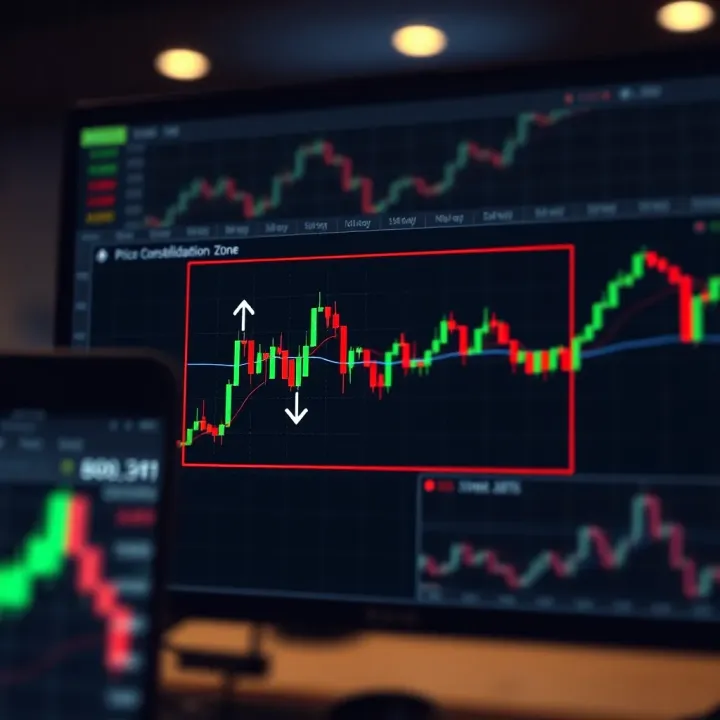
📊 Learn how Box Theory Trading helps spot sideways price moves before breakouts or reversals. Master risk and strategies suited for Indian traders.

📊 Understand deriv trading basics, types, risks & regulations in India. Get tips for smart investing and explore top platforms for CFDs, options & futures trading.
Explore QX trading 📈: its operations, tools, strategies, risks, and regulations to make informed decisions in Indian & global markets.
Based on 13 reviews